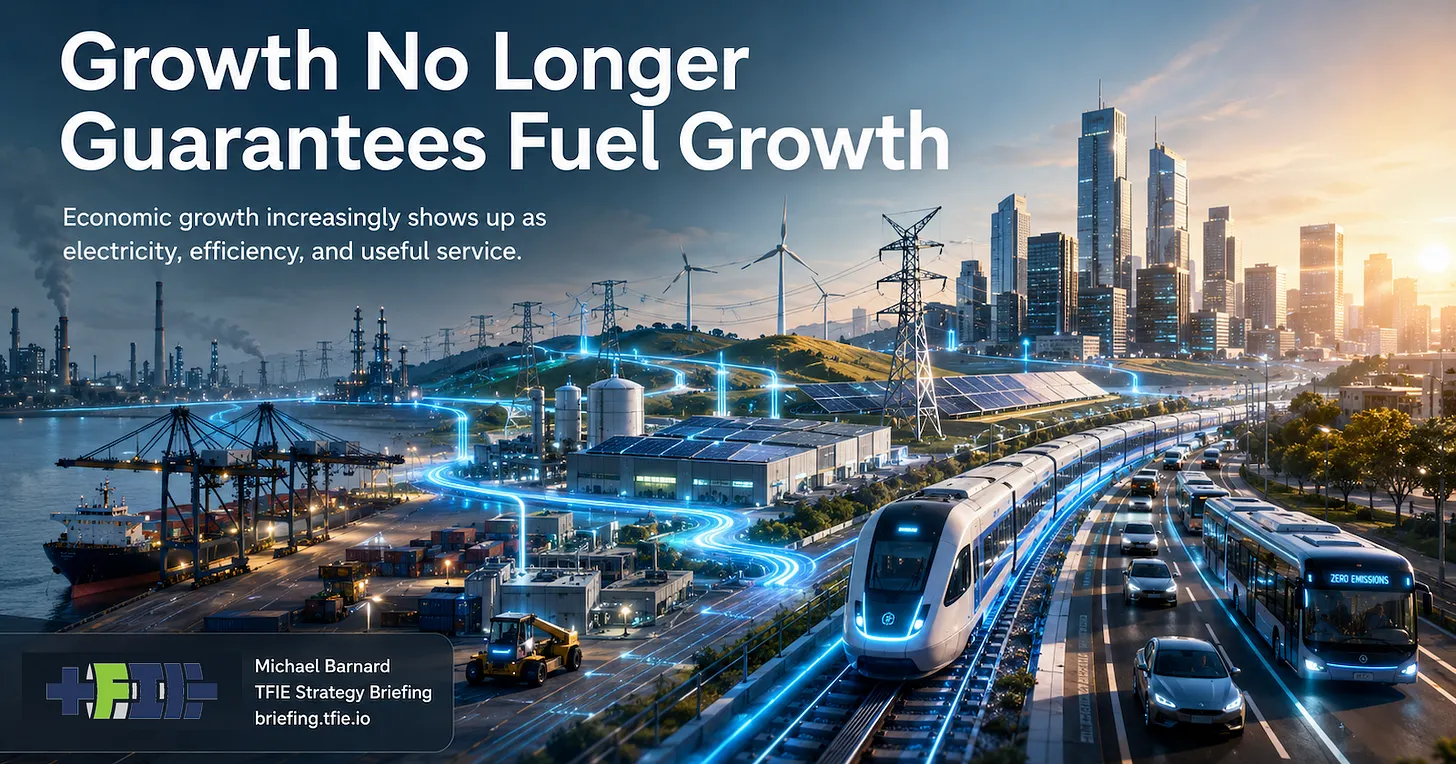
The decoupling of economic growth from fuel consumption has fundamentally altered energy markets. For decades, GDP expansion directly predicted increased energy demand. That correlation no longer holds across developed economies.
Several factors explain this shift. Renewable energy deployment accelerates faster than fossil fuel infrastructure expands. Battery technology improvements lower transportation electrification costs. Industrial efficiency standards reduce energy intensity per unit of output. Service economies require less energy than manufacturing-heavy ones.
Data from the International Energy Agency and national energy agencies confirms the pattern. The United States economy grew 2.9 percent in 2023 while petroleum consumption declined 0.3 percent. Germany's GDP expanded even as coal use fell sharply following renewable capacity additions. Britain decoupled growth from emissions in 2020, with renewables supplying nearly 30 percent of electricity by 2024.
This shift carries major policy implications. Energy forecasters must rebuild models that previously assumed tight GDP-fuel linkages. Central banks reassess stranded asset risks for coal and oil infrastructure. Developing nations chart different pathways than historical precedent suggests possible.
The transition remains incomplete. Global coal demand still rises in Asia, driven by population growth and industrialization. Oil consumption continues climbing worldwide despite renewable gains. Natural gas fills gaps where intermittent renewables dominate grids, creating resilience bottlenecks.
Economists debate whether decoupling represents structural transformation or cyclical fluctuation. Some argue peak oil demand arrives within the decade as transport electrification accelerates. Others contend aviation, shipping, and petrochemical feedstocks sustain fossil fuel reliance through 2050.
Policy choices determine outcomes. Nations implementing carbon pricing, renewable subsidies, and fuel efficiency standards accelerate decoupling. Countries protecting incumbent energy sectors slow the transition. The European Union's carbon border adjustment mechanism and China's renewable capacity targets demonstrate state intervention's role in reshaping demand.