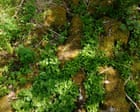
A wood warbler's song led naturalist Mark Cocker to discover the ecological richness beneath Grass Wood in Yorkshire's Wharfedale region. The site, owned and managed by the Yorkshire Wildlife Trust, sits atop limestone pavement, a distinctive geological formation created by erosion patterns that carve deep fissures, called "grikes," between raised blocks of stone called "clints."
Following the bird deeper into this ancient woodland fragment, Cocker observed how the underlying limestone architecture supports a specialized plant community. Lily of the valley and herb paris thrive in the microhabitats created by the pavement's crevices, which provide shelter and moisture retention that allows these species to flourish in what would otherwise be inhospitable conditions.
Limestone pavements represent a particular conservation priority in Britain. The Wharfedale landscape exemplifies how geological features directly shape biodiversity patterns. The fissured stone creates distinct microclimates, each supporting different plants and invertebrates. This complexity explains why limestone woodland sites host higher species diversity than surrounding areas with uniform soil conditions.
Grass Wood's management by the Yorkshire Wildlife Trust reflects growing recognition that protecting these formations requires active stewardship. Limestone pavements face threats from both recreational pressure and historical overgrazing, which can degrade the delicate soil development within grikes. The trust's approach balances public access with habitat protection, allowing visitors like Cocker to experience the woodland while preserving its ecological integrity.
The wood warbler itself inhabits high canopy layers, and its presence signals healthy, mature woodland structure. This breeding songbird's reliance on old trees and dense foliage connects directly to the underlying geology. Without the limestone pavement's influence on soil conditions and water availability, the woodland composition would differ fundamentally, potentially eliminating the bird's preferred habitat.
Cocker's observation demonstrates how careful natural history observation reveals