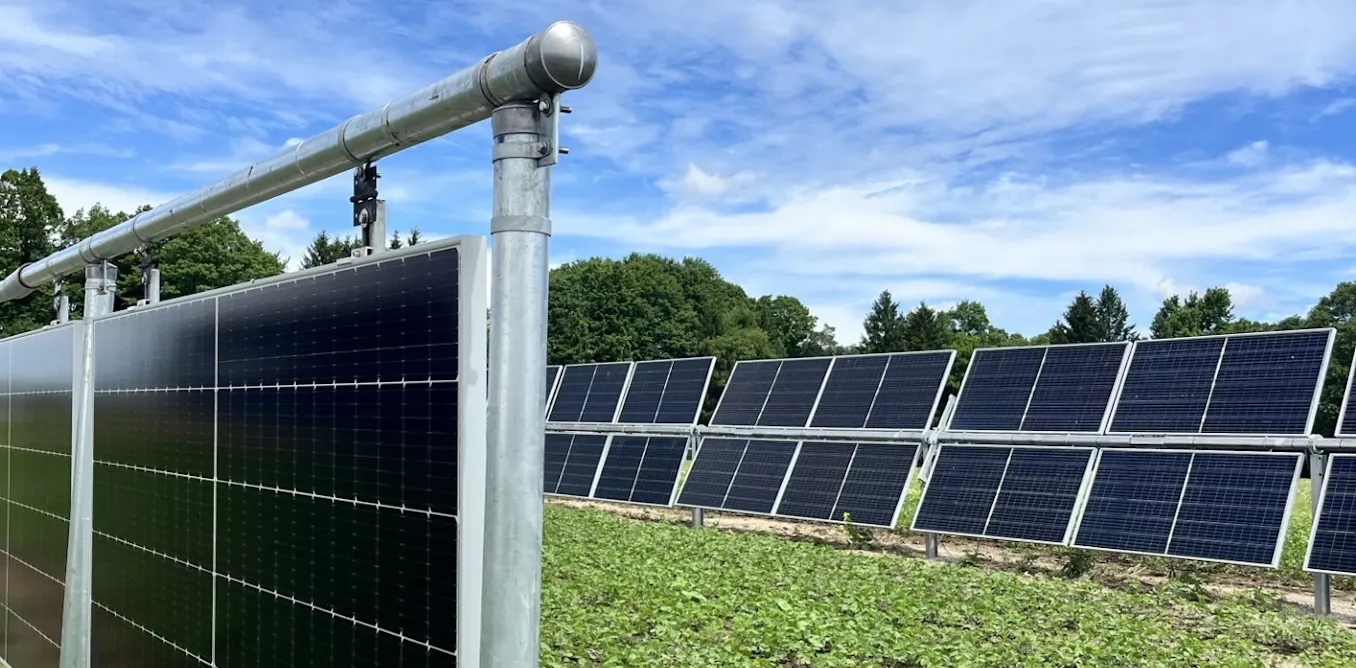
A new study finds that agrivoltaics, the practice of combining solar panels with crop cultivation on the same land, could simultaneously power artificial intelligence data centres and boost food production in Canada. Researchers determined that solar installations across less than one percent of Canadian agricultural land could generate sufficient electricity to decarbonize the country's entire electrical grid.
Data centres supporting AI systems consume enormous amounts of electricity. Google, Microsoft, and other tech giants have committed to expanding server operations, driving grid demand upward. Traditional renewable energy sources often compete with agriculture for land use, creating policy tensions. Agrivoltaics addresses this conflict by stacking functions on limited territory.
The approach positions solar panels at heights that allow crop production underneath. Depending on panel design and spacing, farmers can cultivate grains, vegetables, or raise livestock while harvesting solar energy above. Studies across Europe and Australia have shown crop yields typically decline by 10 to 30 percent beneath panels, though some operations report minimal losses with proper system design.
Canada possesses roughly 93 million hectares of agricultural land. The study suggests that deploying agrivoltaic systems on less than one million hectares could meet grid electricity demands currently supplied by fossil fuels. This calculation assumes mid-range solar efficiency rates and accounts for seasonal variation in Canadian sunlight.
The research arrives as Canada faces competing pressures. The federal government has committed to net-zero emissions by 2050 while supporting domestic semiconductor and data centre industries. Meanwhile, agricultural sectors face climate impacts including drought and extreme weather that threaten productivity.
Agrivoltaics presents a potential solution, though challenges remain. Initial capital costs for dual-use installations exceed conventional solar farms. Grid infrastructure upgrades would require investment. Farmer adoption depends on demonstrating economic viability across different crop types and regional climates.
The study does not claim agrivoltaics represents a complete climate solution.