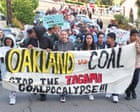
The Trump administration is pursuing a $75 million federal investment to construct a coal export terminal in West Oakland, California, drawing fierce opposition from residents of a neighborhood already burdened by industrial pollution and toxic waste.
West Oakland sits atop a legacy of contaminated sites. The neighborhood borders refineries, hazardous waste facilities, and major transportation corridors that funnel diesel exhaust through residential blocks. Air quality data shows West Oakland residents experience asthma rates significantly higher than Bay Area averages and face disproportionate exposure to particulate matter and sulfur dioxide.
The proposed coal terminal would intensify these environmental pressures. Coal export operations generate substantial dust emissions during loading and transport. Ships carrying coal through Oakland's port would add to existing vessel traffic, increasing diesel particulate pollution in an area where respiratory disease already claims a health toll.
The project revives a controversy from the Obama administration, when similar coal terminal proposals faced fierce local resistance. California's position as a net exporter of renewable energy and its commitment to carbon neutrality by 2045 stand at odds with fossil fuel infrastructure expansion. The state legislature banned the permitting of new coal plants in 2015.
West Oakland residents have organized opposition through community groups, citing both environmental justice concerns and climate commitments. The neighborhood's history as a center of Black activism, from the Pullman Porters' union to the Black Panthers, has informed contemporary organizing around industrial pollution and corporate accountability.
Federal investment in coal infrastructure contradicts California's climate goals and existing state law. The project would lock in decades of coal exports and associated transportation emissions at a moment when California accelerates its transition away from fossil fuels. Environmental justice advocates argue that West Oakland has absorbed disproportionate pollution burdens for generations and should not become a dumping ground for dying fossil fuel industries seeking new export markets.