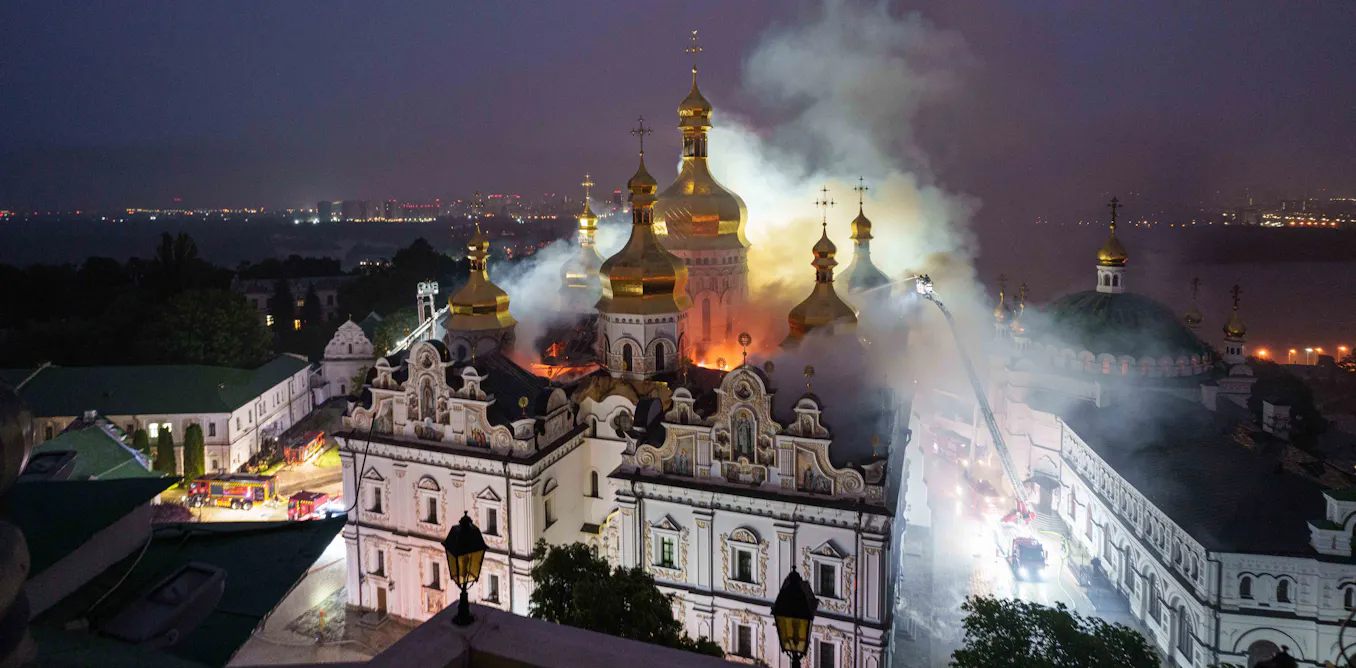
Russian forces struck a centuries-old Ukrainian monastery complex, targeting infrastructure tied to Ukrainian cultural and spiritual identity. The attack underscores Moscow's military strategy of degrading civilian and religious sites alongside military infrastructure.
The monastery complex holds deep significance for Ukrainian Orthodox Christianity and national heritage. The strike reflects a pattern documented by human rights organizations and Ukrainian authorities: Russian forces have systematically damaged or destroyed churches, synagogues, mosques, and other religious structures throughout the conflict. The UN has investigated such incidents as potential war crimes.
Military analysts interpret these attacks as part of a broader campaign to demoralize the Ukrainian population and undermine national cohesion. By targeting spiritually and culturally resonant sites, Russia attempts to weaken Ukrainian resistance and reshape territorial and cultural identity in occupied regions.
Ukraine's cultural ministry has documented hundreds of damaged cultural heritage sites since the 2022 invasion. UNESCO has registered significant losses across churches, museums, theaters, and historical monuments. Restoration efforts will span decades and require substantial international funding.
The strike also reflects Russia's acknowledged military constraints. As conventional forces face attrition and territorial setbacks, attacking civilian and cultural targets offers a lower-risk operational choice than engaging entrenched Ukrainian military positions. Intelligence assessments show Russian forces shifting tactics toward area bombardment and strikes on civilian infrastructure when direct military engagement becomes costly.
International responses have included statements from NATO members and calls for accountability through the International Criminal Court. European governments have linked cultural heritage destruction to broader violations of the Geneva Conventions and have pledged support for documentation efforts.
Ukraine's government views cultural preservation as inseparable from national survival. Reconstruction initiatives are underway even during active conflict, with temporary protection measures deployed at vulnerable sites. Ukrainian religious leaders have continued services at damaged locations, framing continued worship as resistance to Russian erasure efforts.