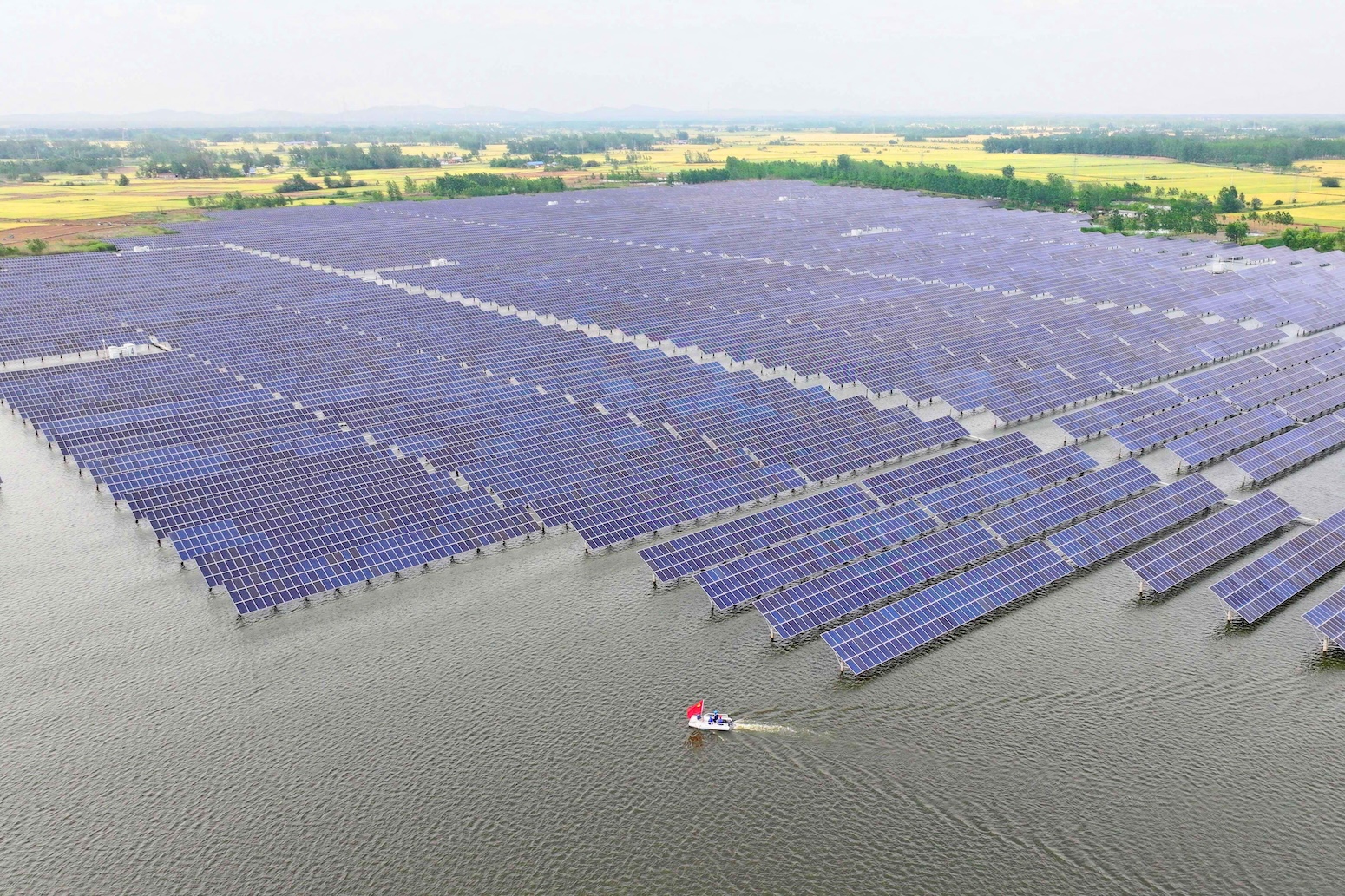
China's solar deployment growth has decelerated after years of rapid expansion, signaling a shift in the world's largest renewable energy market. The slowdown reflects completion of initial grid infrastructure projects, subsidy reductions, and grid saturation in key provinces rather than a collapse in solar investment.
China installed record solar capacity throughout the mid-2010s and 2020s, establishing itself as the global solar leader with over 40 percent of worldwide installations. However, growth rates have moderated as the country exhausts easy-to-develop sites and grapples with curtailment issues. Western China's solar farms increasingly generate power that cannot be efficiently transmitted to population centers in the east, creating bottlenecks.
Government subsidy phase-outs have also weighed on deployment speeds. China shifted from direct feed-in tariffs to auction-based procurement systems, which reduced guaranteed returns and slowed project development timelines. The transition occurred as solar costs dropped sharply, making subsidies less economically necessary.
Grid integration challenges present the primary constraint now. Many Chinese provinces have reached technical limits on how much variable solar and wind power their grids can absorb without destabilizing voltage and frequency. Resolving this requires massive investments in transmission infrastructure and battery storage capacity that lag behind generation buildout.
Despite the slowdown, China continues adding more solar annually than any other nation. Official targets require continued expansion to meet 2030 and 2060 climate commitments. The government aims for 1,200 gigawatts of wind and solar capacity by 2030, up from around 900 gigawatts currently.
The slowdown offers lessons for other countries approaching grid saturation with renewables. Managing the transition from rapid capacity growth to grid integration represents the next phase of global energy decarbonization. China's experience demonstrates that scaling renewables beyond initial deployment requires equally aggressive investment in transmission networks