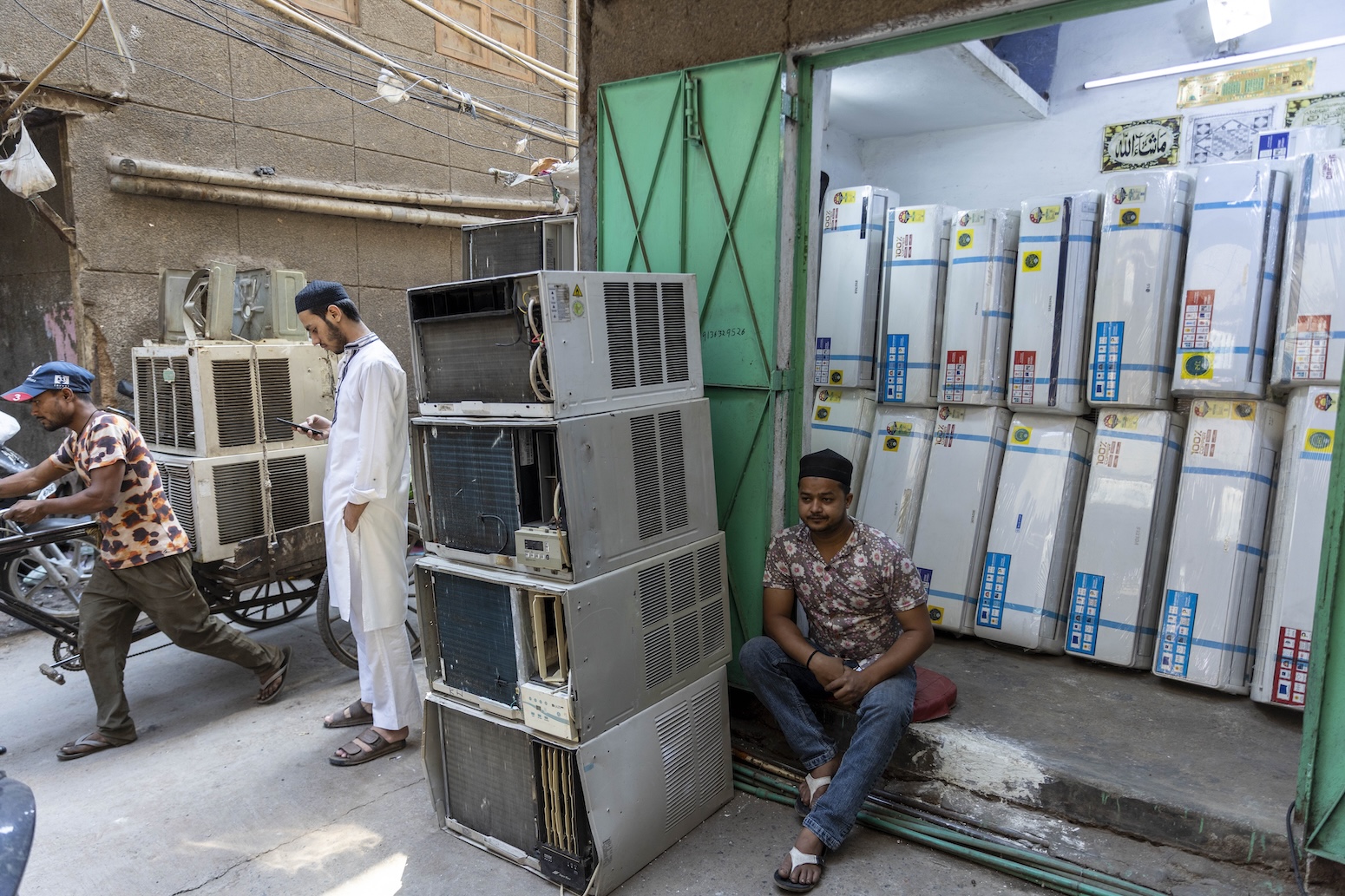
India's households could save 69 billion rupees annually, roughly $724 million, by switching to more energy-efficient air-conditioning units, according to a Carbon Brief analysis.
Air conditioning accounts for a growing share of India's electricity demand. As temperatures rise and disposable incomes increase, AC adoption has accelerated across urban and semi-urban areas. The sector now consumes significant grid capacity during peak cooling seasons, straining power infrastructure and driving higher emissions from fossil fuel generation.
The analysis quantifies the financial and environmental case for efficiency standards. Energy-efficient models reduce per-unit power consumption without sacrificing cooling capacity. The savings accumulate across millions of households. India's appliance market continues expanding rapidly, making this window critical for setting efficiency baselines before inefficient units proliferate.
Current Indian AC efficiency standards lag those in developed markets. The Bureau of Energy Efficiency oversees labeling and minimum performance standards, but advocates argue the requirements remain loose. Stricter mandates would push manufacturers toward better compressors, improved insulation, and smart controls that optimize cooling cycles.
The financial case extends beyond household bills. Lower AC demand reduces pressure on peak generation capacity, delaying costly grid expansion projects. It also cuts emissions from coal and gas plants that supply the incremental electricity. India faces competing pressures to expand electricity access while meeting climate commitments under the Paris Agreement.
Barriers to adoption persist. Energy-efficient units cost more upfront, and many households prioritize affordability over operating costs. Financing mechanisms remain limited in smaller towns. Information gaps also matter. Consumers often lack awareness of efficiency labels and lifetime savings calculations.
Policy levers exist. Subsidy programs could narrow the price gap for efficient models. Awareness campaigns paired with updated labeling could shift purchasing behavior. Mandatory efficiency standards would eliminate the lowest-performing units entirely, raising average performance across the market.
The analysis builds on broader recognition