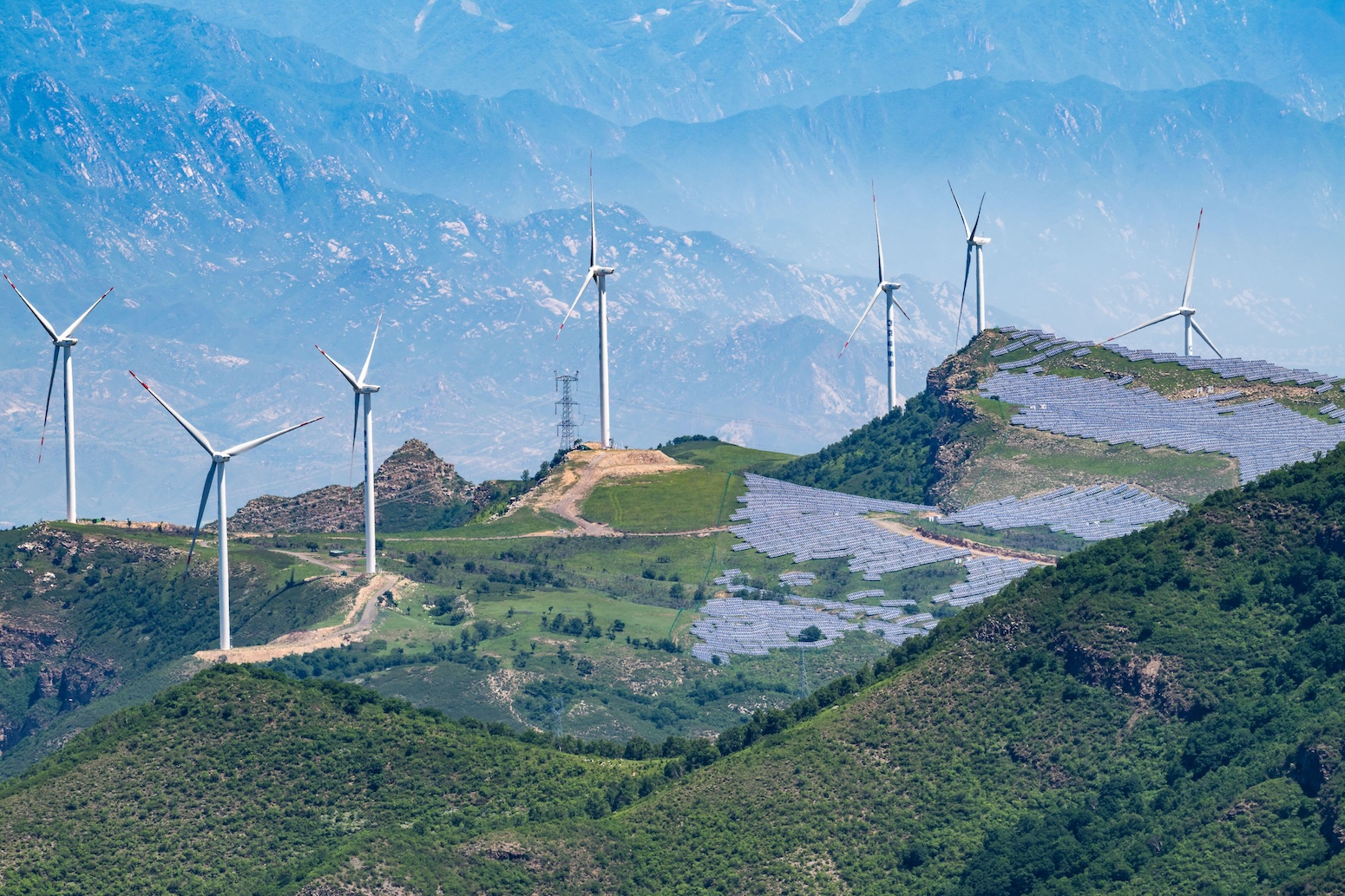
China's carbon dioxide emissions increased 2% in the first quarter of 2026, driven by coal consumption that surged as the country underutilized vast renewable energy capacity. The expansion marks a continuation of China's rising emissions trend despite record installations of wind and solar generation.
Data shows China generated substantial wind and solar output during the quarter but failed to deploy this clean electricity efficiently. Grid constraints and demand management issues forced power generation to rely more heavily on coal-fired plants rather than integrating available renewable sources. This mismatch between renewable capacity and grid utilization directly drove the coal consumption spike.
China's renewable energy infrastructure now exceeds 1.2 terawatts of installed capacity, yet transmission bottlenecks and regional distribution challenges prevent full deployment. The phenomenon of "wasted" renewable generation, known as curtailment, occurs when wind and solar facilities produce power that the grid cannot accept or route to demand centers. Rather than accepting this clean energy, grid operators increase coal plant output to maintain stability and meet consumption targets.
The first quarter increase compounds concerns about China's emissions trajectory. The nation produces roughly 30% of global annual CO2 emissions. Recent quarterly data revealed that 2025 saw China's total emissions reach record levels despite climate pledges.
Grid modernization remains the central challenge. China's electricity system requires enhanced long-distance transmission capacity, battery storage deployment, and demand-side management tools to absorb renewable generation fully. Investment in these areas has lagged behind solar and wind construction rates.
The emissions growth contradicts the renewable energy expansion narrative. China added more solar capacity than any nation in 2025, yet this infrastructure gains prove insufficient without corresponding grid infrastructure upgrades. Analysts point to the disconnect between generation capacity additions and grid integration capabilities as the core problem limiting emissions reductions.
Addressing China's emissions requires decoupling renewable capacity growth from coal reliance. This demands investment shifts