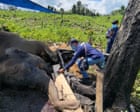
A mother Sumatran elephant and her calf were found dead in Bengkulu province in southern Sumatra in late April, their tusks still present and cause of death unknown. Investigators continue searching for answers, but conservationists point to habitat loss as the primary culprit in the deaths.
The elephants lay side by side in a "production forest" area. A tiger was discovered dead nearby under similarly unclear circumstances. The intact tusks rule out poaching as the immediate cause, yet the deaths underscore a broader conservation crisis facing one of the world's rarest elephant populations.
Sumatran elephants number fewer than 2,400 individuals in the wild, making them critically endangered. Habitat destruction remains their largest threat. Palm oil plantations, logging operations, and agricultural expansion fragment the forests these animals require to survive. As their range shrinks, elephants increasingly venture into human-populated areas searching for food, leading to conflict and often death.
The Indonesian government designated some areas as "production forests," which permit logging and development rather than protecting intact ecosystems. These spaces offer minimal refuge for elephants and other large mammals dependent on continuous forest coverage.
Conservationists working in Sumatra argue that without expanding protected habitat and halting deforestation, more elephants will die. The deaths of this mother and calf represent not isolated incidents but symptoms of systematic habitat loss. Each elephant lost reduces the genetic diversity and population resilience of an already fragile species teetering on the edge of extinction.
The investigation into April's deaths may reveal specific causes. Yet the broader answer remains clear: Sumatran elephants face a shrinking world where survival itself becomes increasingly improbable.