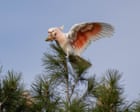
Successive bushfires have devastated breeding habitat for endangered pink cockatoos in Victoria's Wyperfeld National Park, threatening the species' survival. Two fires within 12 years destroyed nearly all mature native pine trees in the park, which serves as a critical nesting ground for the birds.
Pink cockatoos, also called Major Mitchell's cockatoos, require large, old-growth trees with suitable cavities for breeding. The loss of mature pines in Wyperfeld removes essential nesting sites for a species already confined to fragmented populations across southeastern Australia. The park historically represented one of the few reliable breeding locations for the species.
Australia's increasing fire frequency and intensity, driven by climate change, poses accelerating threats to wildlife dependent on specific habitat structures. Wyperfeld's fires illustrate how rapidly fire regimes can exceed species' recovery capacity. Mature pines take decades to develop suitable breeding cavities. The 12-year interval between fires proves too short for forest regeneration.
Pink cockatoos face multiple pressures beyond habitat loss. Illegal trapping for the pet trade has historically decimated populations. Competition for remaining tree cavities from introduced species compounds breeding challenges. The birds' long lifespan and low breeding rates limit population recovery speed.
Conservation efforts at Wyperfeld now focus on artificial nest boxes and habitat restoration. State and federal wildlife agencies acknowledge that passive management no longer suffices for species threatened by intensifying fire regimes. Intervention strategies include targeted fire management, nest box installation, and genetic monitoring to maintain population viability.
The cockatoo situation reflects broader Australian wildlife crises linked to climate change. Native species evolved under historical fire patterns now fundamentally altered. Without rapid emissions reductions and intensive habitat management, species like pink cockatoos face mounting extinction risk. The gap between fire frequency and forest recovery capacity continues widening across southeastern Australia's conservation areas.
CATEGORY