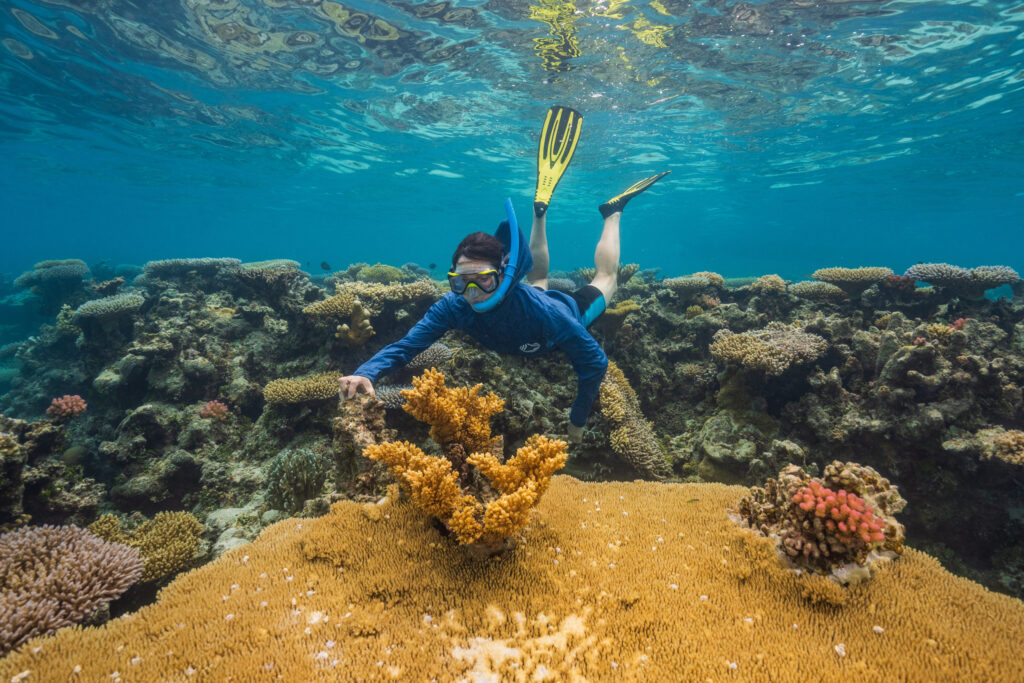
Anne Cohen and researchers from Woods Hole Oceanographic Institution are hunting for coral reefs resilient enough to survive accelerating ocean warming in the Central Pacific.
Ocean temperatures have risen approximately 1.1 degrees Celsius since preindustrial times, with marine heatwaves intensifying bleaching events that devastate coral ecosystems. The 2016 global bleaching event killed roughly 30 percent of the world's coral reefs. A second massive bleaching in 2023 affected reefs across the Atlantic, Pacific, and Indian Oceans, signaling that bleaching events are now arriving faster than reefs can recover.
Cohen's team operates from Majuro in the Marshall Islands, using autonomous technology including an unmanned surface vehicle called Yellowfin to map lagoon conditions and identify coral populations showing heat tolerance. The research targets what scientists call "super reefs"—coral colonies that survive repeated thermal stress through genetic adaptation or environmental protection factors.
Woods Hole scientists are documenting which reef characteristics enable survival. Some reefs benefit from deep water circulation that cools surrounding areas. Others may contain coral genotypes with inherent heat resistance. Understanding these mechanisms matters for conservation planning and potential assisted adaptation strategies.
The research addresses a critical gap. While scientists have identified heat-resistant corals in some regions, including the Red Sea and parts of Southeast Asia, coral ecosystems remain severely threatened. The Intergovernmental Panel on Climate Change projects that limiting warming to 1.5 degrees Celsius would preserve roughly 10 percent of coral reefs, while 2 degrees of warming would eliminate nearly all remaining reefs.
The Marshall Islands face existential stakes. Rising seas threaten the nation's low-lying atolls while warming waters degrade reefs that provide food security and coastal protection for 42,000 residents.
Cohen's fieldwork represents one approach among many. Other