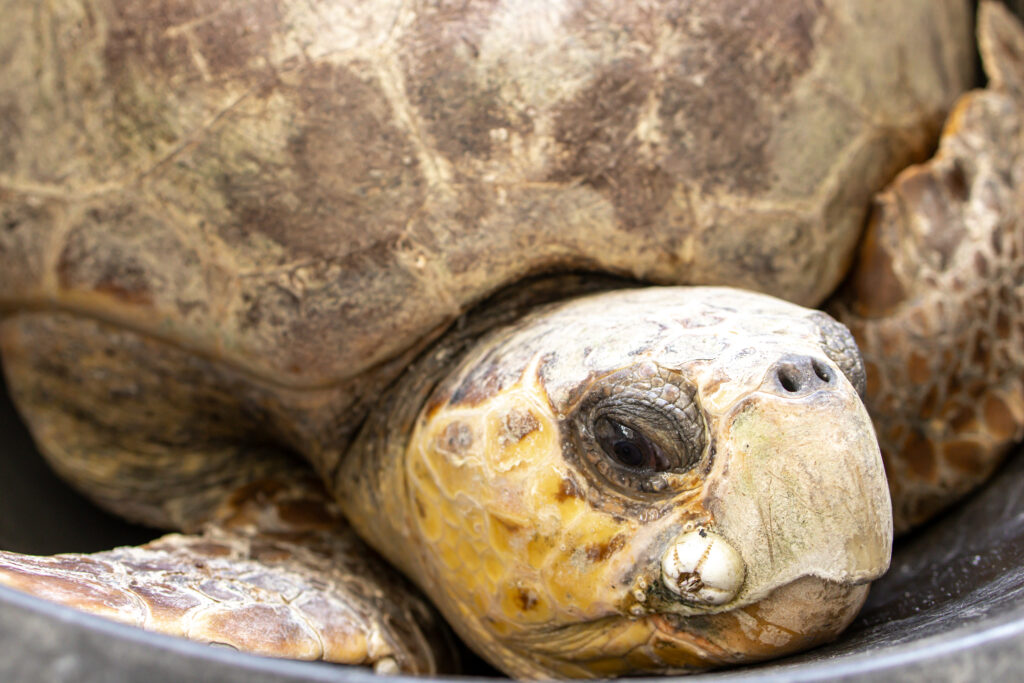
Scott Dexter coordinates a volunteer rescue operation in Florida's Gulf of Mexico, where teams hoist endangered loggerhead sea turtles onto platforms for medical assessment and rehabilitation. The 172-pound male in this instance represents one of hundreds of sea turtles assisted annually by Florida's sprawling volunteer network dedicated to species recovery.
Sea turtle populations face threats from fishing gear entanglement, boat strikes, coastal development, and disease. Loggerheads, listed as vulnerable by the International Union for Conservation of Nature, depend on Florida's beaches for nesting and the coastal waters for feeding and migration corridors. The hoisting procedure allows rescuers to examine turtles for injuries, remove fishing line and nets, and treat infections before release.
Florida's volunteer infrastructure operates across multiple organizations and state agencies. Rescue teams work the Atlantic and Gulf coasts, responding to reports of distressed turtles and coordinating with marine facilities for intensive care when needed. Many volunteers receive training in proper handling techniques to minimize stress on animals during extraction and transport.
The work reflects broader conservation efforts under the Endangered Species Act, which protects loggerheads and four other sea turtle species found in U.S. waters. Florida hosts the majority of loggerhead nesting in the Atlantic basin, with thousands of females returning to beaches each year. However, nest success rates remain constrained by light pollution, predation, temperature fluctuations linked to climate change, and human disturbance.
Volunteer programs expand limited government resources for monitoring and rescue. Training new volunteers, maintaining equipment, and coordinating across jurisdictions requires sustained commitment. The Gulf hoisting operation exemplifies how citizen engagement directly supports species survival where agency capacity alone proves insufficient.
Loggerhead recovery depends on maintaining healthy nesting populations and reducing ocean mortality. Each rescued turtle represents both a life preserved and documentation of threats affecting the broader population. Florida's volunteer network transforms individual