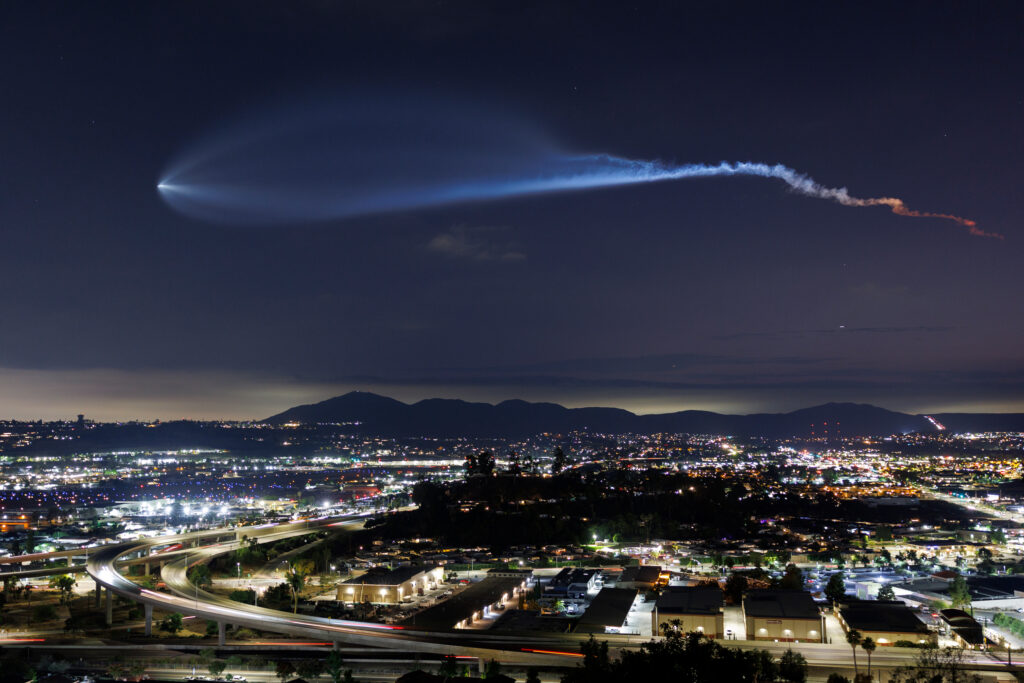
Commercial satellite operators are launching thousands of spacecraft into low Earth orbit, creating a collision between profit motives and humanity's shared access to the night sky. Companies like SpaceX, Amazon, and others deploy mega-constellations for global internet coverage, fundamentally altering the visible heavens above populated regions.
The proliferation raises an urgent regulatory question: who controls orbital space and what environmental limits should apply. The Federal Communications Commission and National Aeronautics and Space Administration issue launch licenses but lack unified authority over cumulative impacts. International treaties like the Outer Space Treaty of 1967 declare space the province of all mankind, yet assign little enforcement power to prevent commercial crowding.
Astronomers report serious interference with ground-based observations. SpaceX's Starlink constellation alone includes over 5,000 operational satellites, with plans for 12,000 more. These objects reflect sunlight during twilight hours, creating bright streaks across telescope images. The European Southern Observatory, which operates advanced instruments in Chile, documented significant data loss from satellite reflectivity. Professional and amateur astronomers lose observing time worth millions of dollars annually.
The light pollution extends beyond research. Dark sky advocates warn that constant overhead traffic erodes the night sky's ecological and cultural value. Nocturnal wildlife, from birds to insects, navigates by celestial cues. Satellite constellations disrupt migration patterns and circadian rhythms. Indigenous communities lose astronomical traditions tied to specific constellations and seasonal positions.
Mitigation efforts remain inadequate. SpaceX deployed darker paint and sunshades on recent Starlink launches, reducing brightness by roughly half. This falls short of restoring sky conditions that existed before large constellations. The company now coordinates with observatories on launch timing, a voluntary measure with limited scope.
The International Astronomical Union, the U.S. National Academy of Sciences, and the