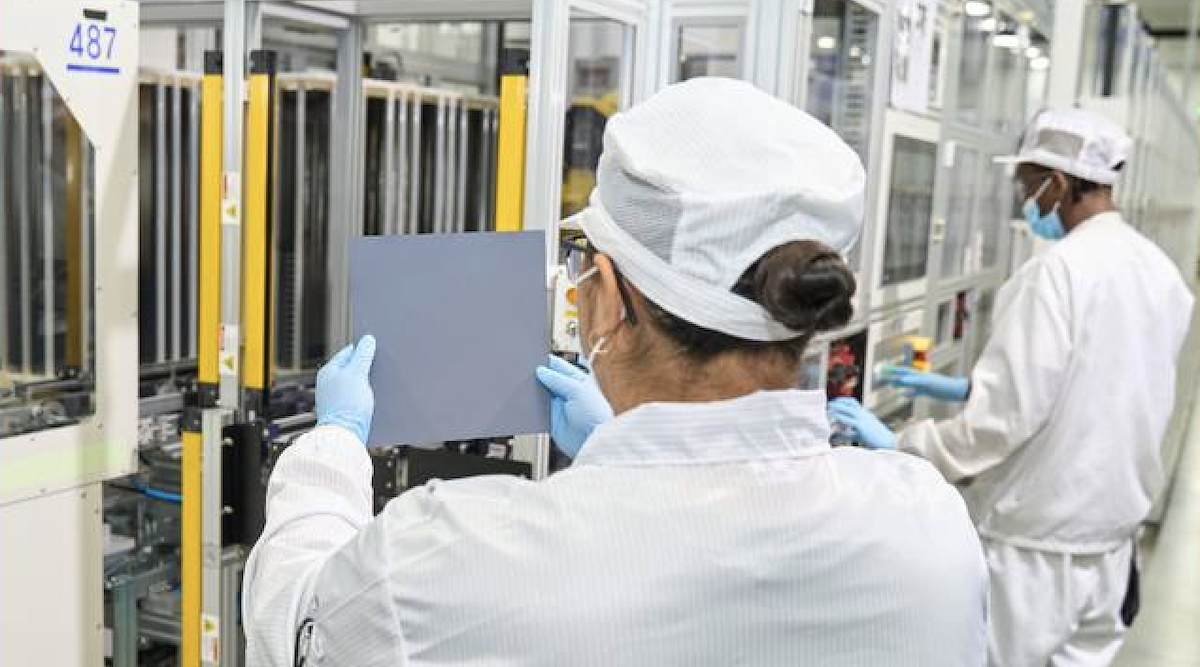
Qcells, the US subsidiary of South Korean manufacturer Hanwha Q Cells, has completed vertical integration at its solar manufacturing facility in Cartersville, Georgia, by adding on-site solar cell fabrication. The expansion enables the company to produce fully domestically-made solar products, from raw materials through finished panels.
The move positions Qcells to capture substantial federal incentives under the Inflation Reduction Act and other domestic content policies. The company now manufactures solar cells and modules entirely within the United States, eliminating reliance on imported components that would trigger tariffs or reduce tax credit eligibility.
Georgia has emerged as a solar manufacturing hub under Republican administration, attracting multiple panel and cell producers despite the state's historical reliance on coal and natural gas. Qcells joins other manufacturers expanding domestic production capacity in red states, including operations in South Carolina and other conservative-leaning regions.
The fabrication expansion reflects broader industry trends driven by federal policy incentives and supply chain resilience concerns following disruptions tied to geopolitical tensions and trade restrictions. Companies pursuing vertical integration can qualify for the full 30 percent federal tax credit available under the IRA for domestic solar modules, compared to reduced benefits for partially imported products.
Qcells has invested heavily in US manufacturing over the past three years, previously opening a module assembly facility in Georgia before adding cell production capabilities. The company competes with other foreign manufacturers establishing US operations, including Meyer Burger and others seeking to capitalize on domestic incentive structures.
The Cartersville facility now represents a complete solar supply chain within a single location, handling everything from cell production to module assembly. This integration reduces transportation costs and supply chain vulnerabilities while strengthening Qcells' competitive position in the American market, where tariffs and domestic content rules increasingly drive purchasing decisions for utility-scale and residential installations.