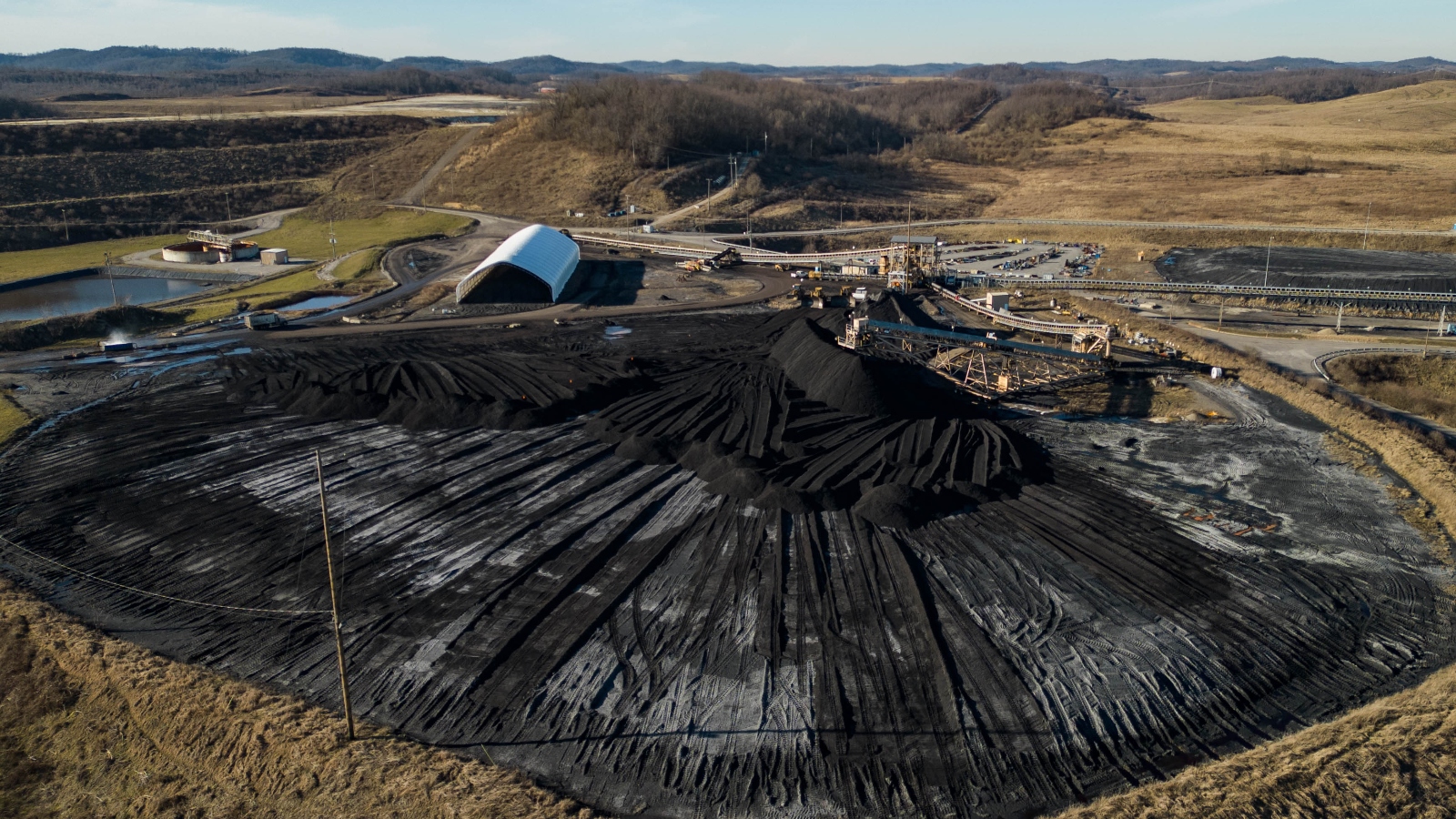
President Trump invoked the Defense Production Act to allocate $700 million toward constructing two new coal plants, one in Alaska and another in West Virginia. The administration framed the investment as essential infrastructure while describing coal as "clean, beautiful" energy.
The Defense Production Act grants the president broad authority to direct resources toward projects deemed vital to national defense or economic security. Trump's deployment of this wartime mechanism to expand coal generation represents an aggressive pivot toward fossil fuels at a moment when U.S. coal capacity has faced decades of decline due to competition from cheaper natural gas and renewable energy.
The Alaska project centers on a facility in the Matanuska-Susitna Valley, while the West Virginia site remains in early planning stages. Both installations would add to the nation's coal-fired electricity infrastructure as global emissions commitments and state-level climate policies continue to pressure coal's market share. The U.S. Energy Information Administration reported that coal accounted for roughly 17 percent of U.S. electricity generation in 2023, down from 50 percent in 2005.
Coal combustion produces significant carbon dioxide emissions. A single large coal plant can emit 5-6 million metric tons of CO2 annually, depending on capacity and technology. Full lifecycle assessments, including mining and transportation, increase that footprint further.
The move contrasts sharply with global trends. The International Energy Agency projects that coal demand will decline through 2030 under current policies. Several states have already enacted coal phase-out timelines, and the previous administration had pursued rules limiting coal plant emissions.
Trump's decision to weaponize the Defense Production Act for fossil fuel expansion signals a fundamental reorientation of federal energy priorities. The administration argues coal remains critical for grid stability and domestic energy independence. Environmental advocates warn the investments lock in decades of carbon emissions while diverting federal resources from renewable infrastructure that analysts say offers