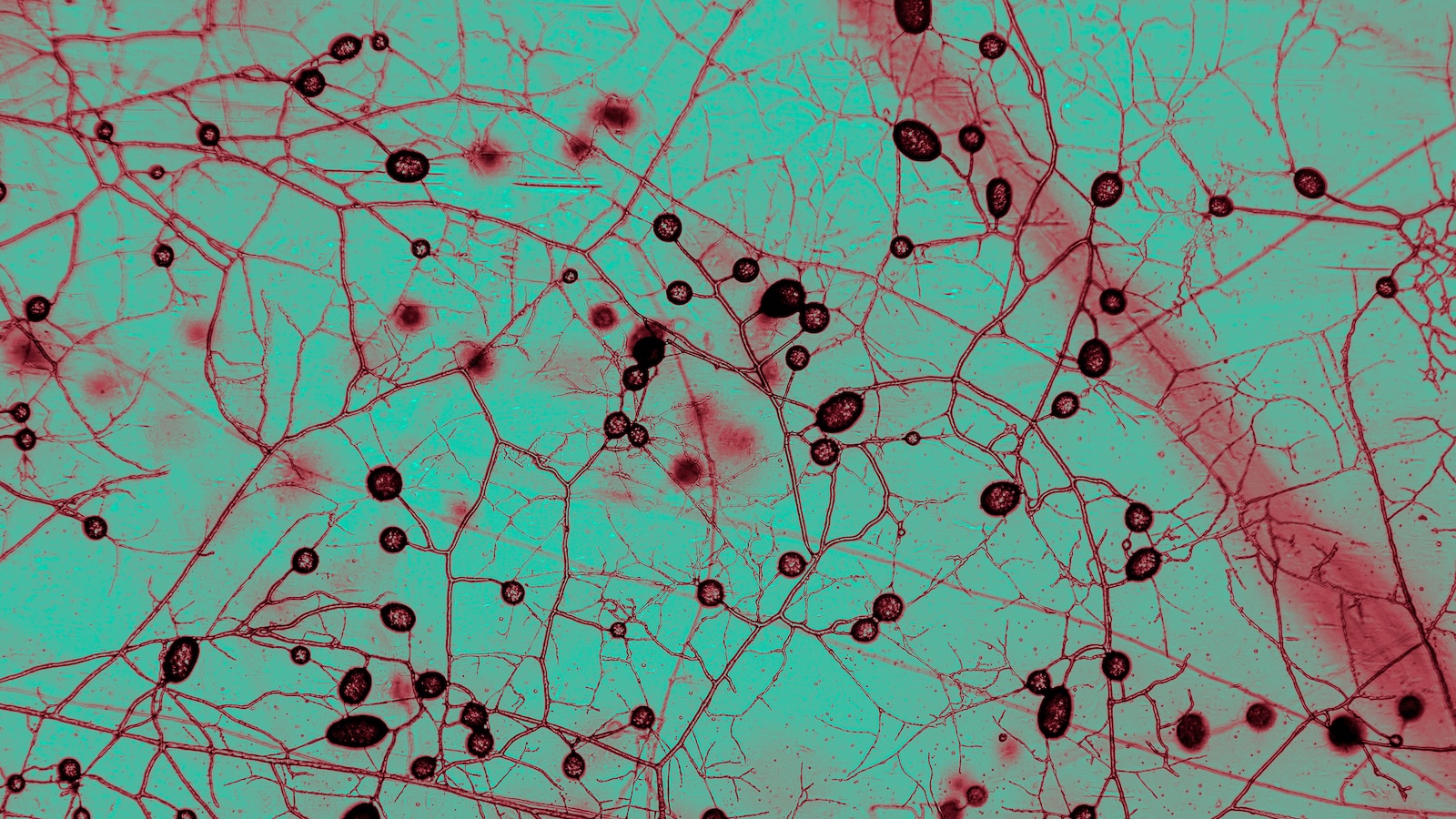
Arbuscular mycorrhizal fungi form the largest biological network on Earth, spanning 110 quadrillion kilometers and connecting roughly 80 percent of terrestrial plants to nutrient supplies and water. These threadlike organisms live inside plant roots and extend through soil, creating a symbiotic system that sustains global vegetation and ecosystems.
New research reveals this fungal network plays a dual role in Earth's climate system. The fungi help plants absorb phosphorus and nitrogen while improving water retention in soil, strengthening plant resilience and carbon storage capacity. This mechanism cools the planet by enabling plants to sequester more atmospheric carbon in their tissues and roots.
However, the same fungi transport an equally enormous volume of carbon through soil in the opposite direction. When plants photosynthesize, they transfer sugars and carbon compounds to fungal partners through root systems. The fungi then respire, releasing significant quantities of carbon dioxide back into the atmosphere. Scientists estimate this represents a major flux in the global carbon cycle, though the precise quantity remains difficult to quantify.
The stakes center on whether fungal respiration reduces or negates the cooling benefits that mycorrhizal associations provide. Land management practices, soil temperature changes, and agricultural practices all influence fungal activity rates. In agricultural systems where fungi are disrupted by tillage and chemical inputs, this symbiotic cooling effect diminishes.
Climate models have historically underestimated the role of these fungal networks in regulating planetary carbon flows. As climate scientists refine their understanding of mycorrhizal carbon transport, policy discussions around soil health and regenerative agriculture take on new weight. Protecting fungal networks through reduced soil disturbance and diverse plant communities emerges as a legitimate climate mitigation strategy alongside carbon reduction and renewable energy deployment.
The fungal network operates largely invisible to human observation, yet its influence on atmospheric composition rivals that of major industrial systems.