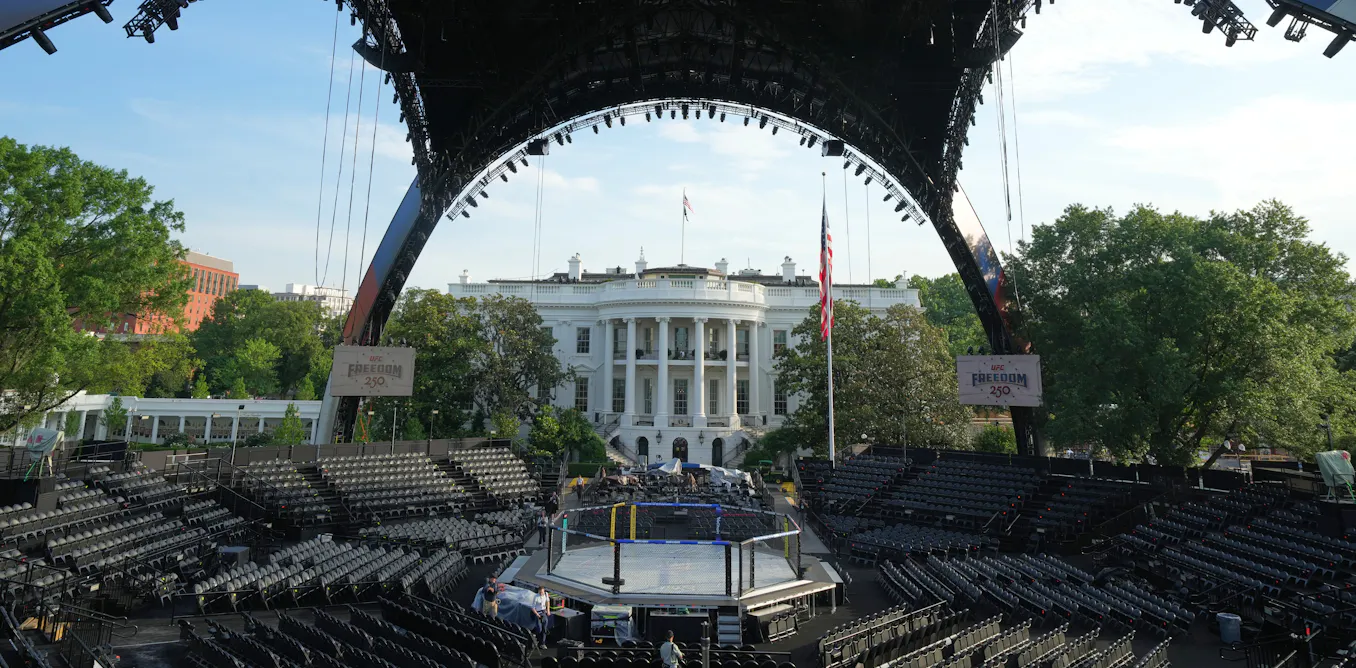
# White House UFC Event Raises Questions About Political Branding and Sports Culture
The White House will host a UFC event, marking an unusual convergence of combat sports and executive politics. UFC commentator Joe Rogan characterized the event as a "gimmick," while President Donald Trump promoted it as beneficial for the nation.
The event reflects broader trends in American political messaging. Major sporting events held at the White House traditionally emphasize athletic achievement and national pride. This UFC hosting represents a deliberate cultivation of alignment between the administration and combat sports audiences, a demographic the political establishment has actively courted in recent years.
UFC's mainstream integration into American entertainment has accelerated substantially since the sport's early days. The organization now reaches millions of viewers through mainstream broadcasting partnerships and digital platforms. The White House event capitalizes on this expanded reach and the passionate fan engagement the sport generates.
Rogan's criticism as a gimmick points to tensions within sports culture itself. Combat sports purists argue that institutional promotion can dilute the sport's authenticity, while others view state-level endorsement as validation of professional legitimacy.
The political dimension extends beyond optics. UFC attracts working-class and rural voters whom both political parties actively target. By hosting the event, the administration signals cultural alignment with audiences who engage deeply with combat sports content. This positioning differs from traditional White House sporting partnerships, which typically featured established Olympic or team-sport athletes.
Sports analysts note that hosting rights and event timing carry implicit messaging. The White House UFC event occurs amid broader political efforts to reshape the administration's cultural associations and expand its coalition.
Trump's promotion of the event as "great for America" frames combat sports as aligned with national interests and values. This framing attempts to legitimize UFC within establishment institutions, a shift from decades when combat sports occupied a more marginal cultural position.
The event crystallizes how modern political campaigns leverage entertainment and sports celebrity. Whether viewers