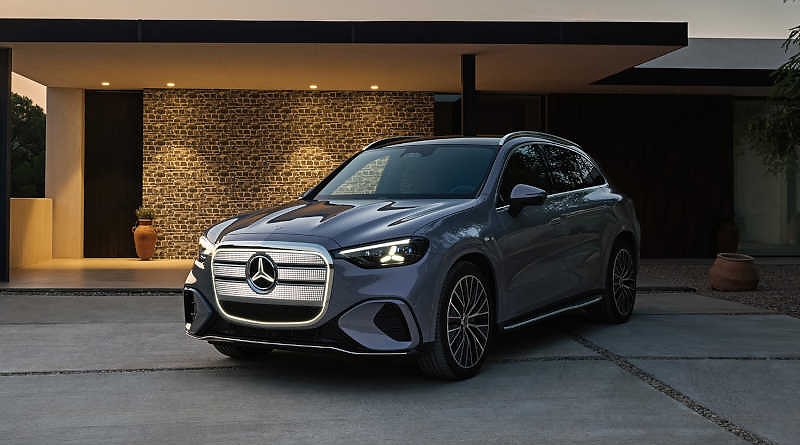
Mercedes-Benz revealed design details for its upcoming GLC electric SUV at an Arizona event, betting on continued demand in the U.S. luxury EV market despite the shift in federal energy policy. The German automaker's move signals confidence that premium-segment buyers will sustain EV adoption even as federal incentives and support face rollback.
The GLC will join Mercedes' expanding electric lineup in North America. The company positions the SUV to capture market share in the luxury segment, where consumers typically exhibit less price sensitivity to federal tax credits than buyers of mass-market EVs. This strategy reflects a bifurcated EV market: while mainstream EV sales depend heavily on incentives and charging infrastructure funded by federal programs, luxury buyers often prioritize performance, brand prestige, and technology over subsidies.
The timing of Mercedes' announcement comes as the incoming administration signals a departure from the Biden administration's aggressive EV promotion, including the $7,500 federal tax credit that drove much of recent EV adoption. The administration has signaled intent to reduce federal EV support, raising questions about the sector's long-term growth trajectory.
Mercedes' gamble reflects calculations that luxury automakers can succeed in EVs through a different path than mass-market competitors. Premium vehicles command higher margins, allowing manufacturers to absorb production costs without relying on consumer subsidies. The luxury market also benefits from developed charging networks in wealthy urban and suburban areas where Mercedes' target demographic lives and works.
The GLC announcement underscores a broader industry reality: the EV transition continues despite policy uncertainty, but its pace and shape will differ by market segment. Luxury automakers like Mercedes, Tesla, and BMW pursue electrification based on brand positioning and profit margins rather than federal mandates. Meanwhile, traditional mass-market EV producers face steeper challenges if federal support contracts.
Arizona's selection as the reveal location reflects the state