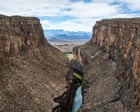
The Trump administration issued waivers exempting border wall construction from federal environmental and historical preservation laws, clearing the way to build through Big Bend National Park in southwest Texas. The park encompasses 801,163 acres of desert wilderness along the Rio Grande.
The administration invoked the Real ID Act of 2005, a statute that grants the Department of Homeland Security blanket authority to bypass environmental review requirements during border barrier construction. The waivers eliminate compliance with the National Environmental Policy Act, the Endangered Species Act, and the National Historic Preservation Act.
Congress allocated $46.5 billion for border wall construction in recent appropriations. The longest unwalled stretches of the southern border lie within Big Bend, making it a target for rapid construction under the current administration's stated priorities.
The move has triggered fierce opposition from conservation groups and local officials in Texas. The park sits along critical migration corridors for endangered species including jaguars, ocelots, and desert bighorn sheep. The Rio Grande corridor supports rare plant communities found nowhere else in the United States.
Big Bend contains archaeological sites documenting Native American occupation spanning thousands of years, as well as historic structures from 19th-century settlement and military operations. The National Park Service has not yet released details on the wall's exact route through the park.
Environmental advocates argue that the wall construction will fragment habitat, disrupt water flows in an arid ecosystem already stressed by climate change, and permanently scar one of America's most remote protected landscapes. The park attracts roughly 500,000 visitors annually, generating substantial local economic activity through tourism.
Proponents of wall construction cite border security concerns, though recent data shows illegal border crossings have declined significantly from peaks in 2019 and 2021. The Trump administration has prioritized barrier completion regardless of environmental cost or current crossing trends.