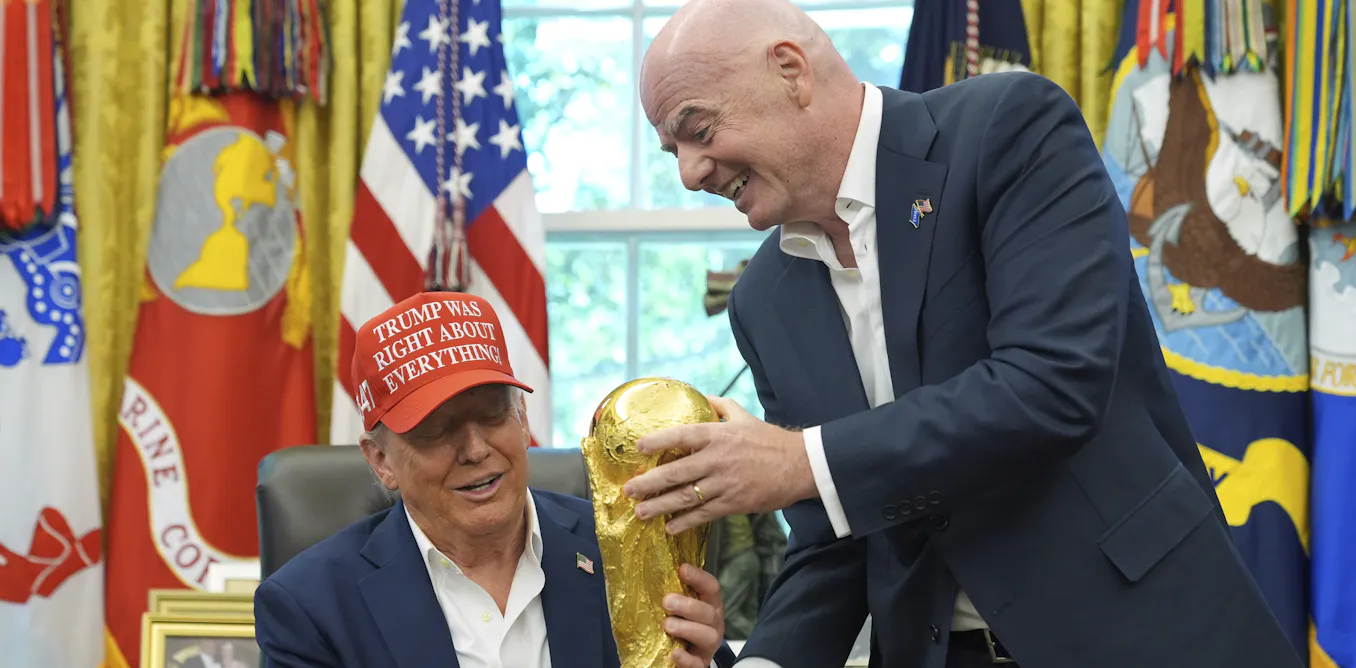
# Donald Trump's World Cup Strategy Faces Credibility Test
The United States faces a credibility gap as it prepares to co-host the 2026 FIFA World Cup alongside Mexico and Canada. Trump administration officials view the tournament as a tool for projecting American influence globally. Host nations historically leverage major sporting events to burnish their international image and advance diplomatic objectives.
Early indicators suggest the infrastructure and political groundwork remain incomplete. Tournament logistics demand coordination across three countries, unified visa policies, and substantial stadium investment. The U.S. has committed to hosting 12 matches but lacks finalized venues and security protocols.
The distinction between soft power and spectacle matters here. Soft power operates through sustained engagement, cultural appeal, and institutional credibility. Spectacle offers temporary pageantry without lasting diplomatic benefit. Trump's approach risks emphasizing the latter. His administration's recent rhetoric on immigration, trade, and climate policy alienates key international stakeholders.
Climate commitments present one flashpoint. FIFA increasingly requires host nations to meet environmental standards for stadium construction and operations. The U.S. withdrawal from emissions reduction frameworks contradicts these expectations. Mexico and Canada operate under stronger climate commitments under the USMCA trade agreement, creating tension within the hosting arrangement.
Visa processing for fans and athletes compounds the problem. Trump's previous immigration policies created bottlenecks that foreign visitors experienced firsthand. Reversing that reputation requires sustained institutional change, not tournament messaging.
Political polarization at home undermines the unified message hosting nations project. Domestic divisions over immigration, environmental policy, and infrastructure spending weaken America's ability to present coherence to global audiences.
Tournament attendance projections depend on perceived welcome and smooth operations. Mexican and Canadian hosts can offset some U.S. deficiencies through their own diplomatic capital, but the co-hosting structure demands American cooperation.
The 2026 World Cup offers Trump an