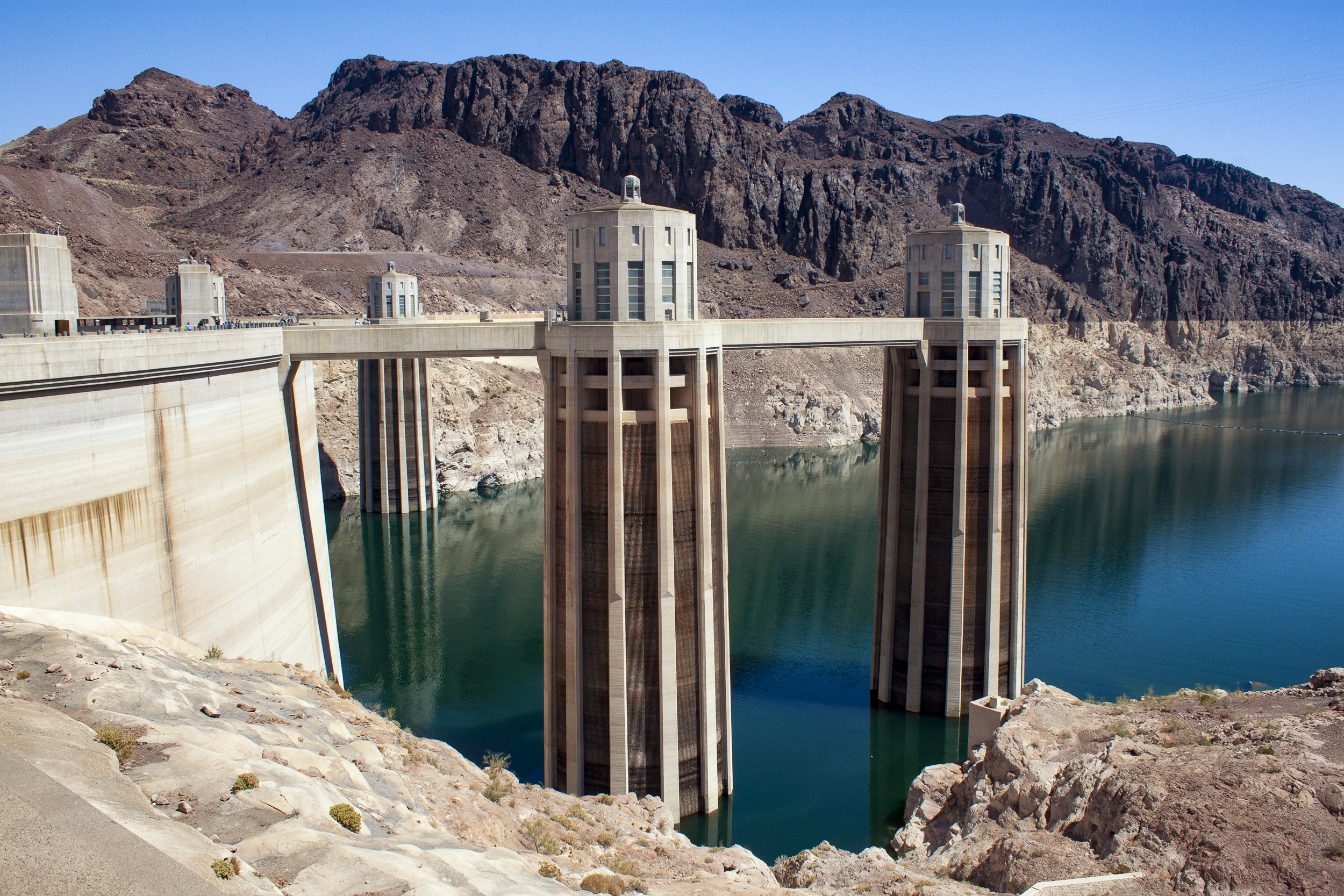
Lake Mead's water level threatens to cripple Hoover Dam's power generation within the year. When the reservoir drops below 1,035 feet above sea level, hydropower capacity will plummet by 70 percent, from current levels to a fraction of what the facility typically produces.
The Hoover Dam generates roughly 2,000 megawatts at full capacity, serving Nevada, Arizona, and Southern California. A 70 percent reduction would eliminate approximately 1,400 megawatts from the grid. That loss would hit during peak demand periods, forcing utilities to scramble for replacement power from fossil fuel plants or other sources.
Lake Mead, created by the dam, has fallen to historic lows as the Colorado River basin enters its 23rd year of drought. The Southwest's megadrought, driven by climate change and reduced snowpack in the Rocky Mountains, has persisted far longer than officials anticipated when they set current operational protocols. The water level currently hovers dangerously close to the threshold.
The timing remains uncertain. The reservoir could fall below the critical elevation within months, or it might hold steady through spring depending on winter snowfall and water releases upstream. But the trajectory points downward. The Bureau of Reclamation has already implemented cuts to water allocations across the basin to preserve minimum water levels at both Lake Mead and Lake Powell.
This scenario represents an unprecedented stress on the regional grid and on the millions who depend on Colorado River water. The dam supplies drinking water to 25 million people across the West. Losing 70 percent of its hydropower capacity would require emergency measures: more imported electricity, higher utility bills, potential rolling blackouts, and accelerated use of backup natural gas generators.
Engineers have proposed temporary solutions, including installing additional turbines at lower water levels and diverting water through alternative outlets. But these measures