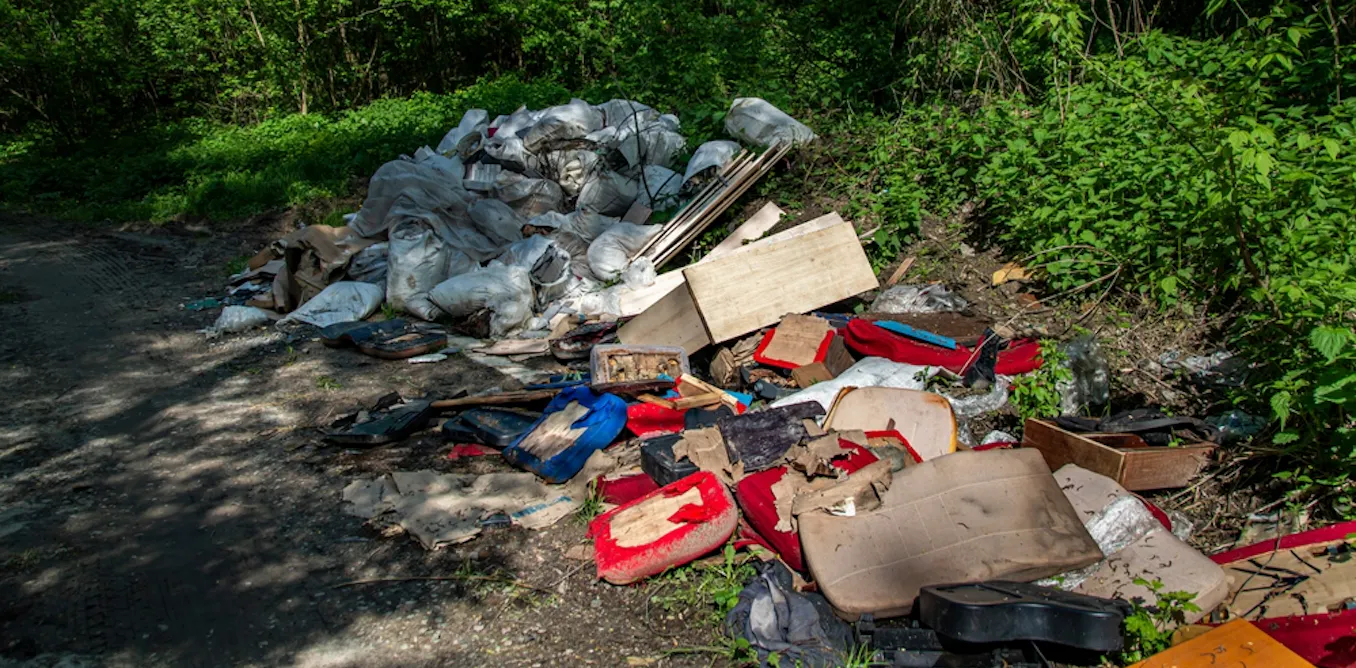
Illegal waste dumping costs governments across developed nations millions annually in cleanup expenses and enforcement resources. Criminal gangs exploit weak monitoring systems to dump construction debris, hazardous materials, and household waste on public land, private property, and protected ecosystems. The practice degrades soil quality, contaminates groundwater, and threatens wildlife habitats.
Artificial intelligence and drone surveillance offer new enforcement tools to combat this problem. AI systems can analyze satellite imagery and aerial footage to identify unauthorized dump sites with speed human inspectors cannot match. Drones equipped with high-resolution cameras and thermal sensors can access remote locations, document evidence of illegal activity, and create digital records suitable for prosecution. These technologies reduce the time between discovery and response, minimizing environmental damage.
The United Kingdom reports fly-tipping costs the National Health Service and local authorities over 150 million pounds annually in cleanup and monitoring. Similar patterns emerge across Europe and North America, where understaffed environmental agencies struggle to patrol vast territories. Criminal networks deliberately target rural areas with sparse surveillance and limited enforcement presence.
Implementation challenges exist. Initial investment in drone fleets, AI software, and operator training requires substantial capital. Data privacy concerns arise when drones survey private property boundaries. Local authorities must coordinate with police and environmental regulators to ensure evidence collected through these technologies meets legal standards for criminal prosecution.
Pilot programs in several regions demonstrate feasibility. South Wales authorities deployed drones to monitor identified dumping hotspots and achieved faster response times. The UK Environment Agency partnered with tech companies to test AI image recognition on satellite data from suspected illegal sites.
Success depends on sustained funding and political commitment. Technology alone cannot eliminate fly-tipping without robust prosecution of offenders and penalties sufficient to deter criminal operations. Coupling drone surveillance with targeted enforcement creates a multiplier effect, making illegal dumping riskier and less profitable for gangs operating across borders and jurisdictions.