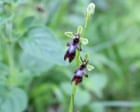
The fly orchid deploys one of nature's most elaborate deceptions: its flower mimics a female wasp so convincingly that male wasps attempt to mate with it, pollinating the plant in the process. Found on Wolstonbury Hill in West Sussex, Ophrys insectifera flowers from mid-May in chalk grassland and woodland edges, where it grows alongside bugle, wild marjoram, and agrimony.
The orchid's reproductive strategy relies entirely on this sexual deception. Male wasps, fooled by the flower's visual and chemical signals that mimic female wasps, land on the bloom seeking to copulate. During these futile mating attempts, pollen sacs attach to the wasp's body. When the insect visits another fly orchid, it transfers pollen between flowers, completing pollination without any reward to the pollinator. The wasp receives nothing. The plant exploits the insect's reproductive drive for its own propagation.
British orchids carry names reflecting their animal likenesses: lady orchid, frog orchid, man orchid, spider orchid, and fly orchid. This naming tradition highlights how these plants evolved appearance and scent to manipulate specific insect species. The fly orchid specifically targets digger wasps of the genus Argogorytes.
The strategy carries evolutionary risk. The orchid depends entirely on the presence and behavior of its wasp pollinator. Climate shifts, pesticide use, or changes in wasp populations directly threaten the orchid's reproduction. Conservation of these plants requires protecting not just the orchids themselves but the intact ecosystems supporting their specific insect partners.
Charles Darwin documented fly orchid pollination but never witnessed the act directly, noting the rarity of catching male wasps in the act of pollinating these deceptive flowers. Observers today remain fortunate to see this interaction