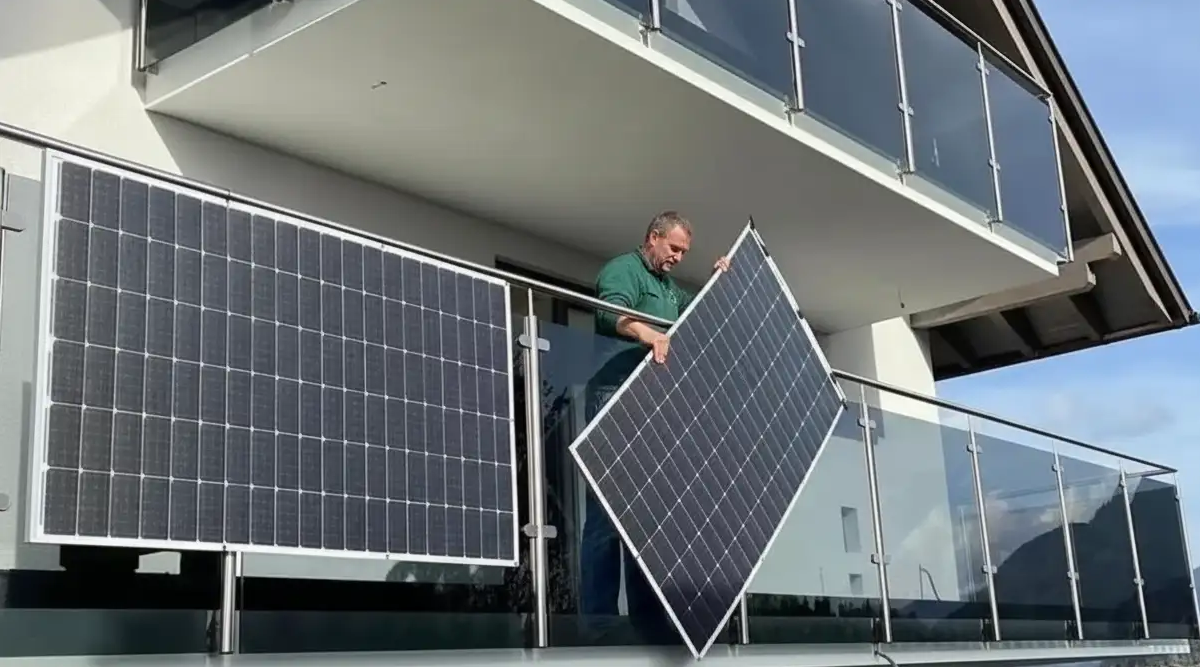
California lawmakers are advancing legislation to streamline permitting for balcony-mounted solar panels, removing barriers that have slowed adoption of plug-and-play renewable systems across the state.
The bill addresses a growing bottleneck in distributed solar deployment. Traditionally, installing even small rooftop or balcony systems required homeowners to navigate months of permit applications and hire licensed installers. California's new approach eliminates these requirements for qualifying installations, allowing renters and apartment dwellers to connect standardized solar modules directly to existing electrical outlets.
This policy shift reflects a broader recognition that regulatory friction unnecessarily delays residential renewable energy. Balcony solar systems—typically 400-800 watts of capacity per unit—pose minimal electrical safety risks when designed to current standards. They cannot backfeed hazardously into the grid without proper hardware. The systems simply produce power for immediate household consumption, reducing demand for grid electricity.
Several European countries, particularly Germany, normalized balcony solar years ago. Germany now has approximately 1 million installed units. That regulatory template demonstrates feasibility at scale without safety incidents. California's legislation brings the state into alignment with proven international models.
Plug-and-play solar removes cost friction too. By eliminating permitting delays and installer fees, the economics improve dramatically for cost-conscious households and renters previously excluded from solar adoption. Current residential solar markets concentrate benefits among wealthy homeowners with capital for upfront installation.
The legislation faces no substantial opposition from utilities or safety agencies. California's Public Utilities Commission supports streamlined deployment of distributed generation assets below specified capacity thresholds. The state's electrical code bodies have validated hardware standards for safely limiting backfeed current.
This represents incremental but tangible progress toward broader decentralized electricity generation. As California pursues its 2045 carbon neutrality target, scaling residential renewable adoption matters. Rooftop and balcony solar reduces