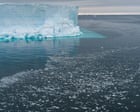
Antarctica's west coast has lost sea ice coverage equivalent to France's total area, with the Bellingshausen Sea showing dramatic winter ice deficit. Temperatures across the Antarctic peninsula spiked 20 degrees Celsius above historical averages, reaching 15.4 degrees Celsius during daytime hours last week.
The missing ice represents a failure of winter sea ice formation during the austral season, when ice should be expanding. Scientists characterize the loss as severe. The absence of this protective ice layer directly threatens penguin populations that depend on sea ice platforms for breeding, resting, and access to food sources. Other marine species relying on sea ice ecosystems face habitat collapse.
The temperature anomaly appears connected to the ice deficit. The heatwave that swept the Antarctic peninsula last week likely intensified due to reduced sea ice coverage. Open water absorbs more solar radiation than reflective ice surfaces, creating a feedback loop that amplifies warming. This mechanism accelerates further ice loss.
Global sea levels face indirect pressure from this Antarctic development. While sea ice itself does not raise sea level when it melts (since it already displaces water), widespread ice loss signals broader warming trends threatening the Antarctic ice sheet. The continental ice sheet, if destabilized by warming oceans and atmosphere, could release vast freshwater reserves and cause substantial sea level rise affecting coastal populations worldwide.
The Bellingshausen Sea region sits on Antarctica's western flank, where ocean currents bring relatively warm water southward. This geography makes it especially sensitive to temperature fluctuations. Recent decades have shown increasing winter ice variability in this sector.
Scientists monitoring Antarctic conditions emphasize that winter ice dynamics carry outsized importance for ecosystem health. The current deficit underscores accelerating climate impacts on polar regions. Continued warming will likely produce more severe ice formation failures in coming years.