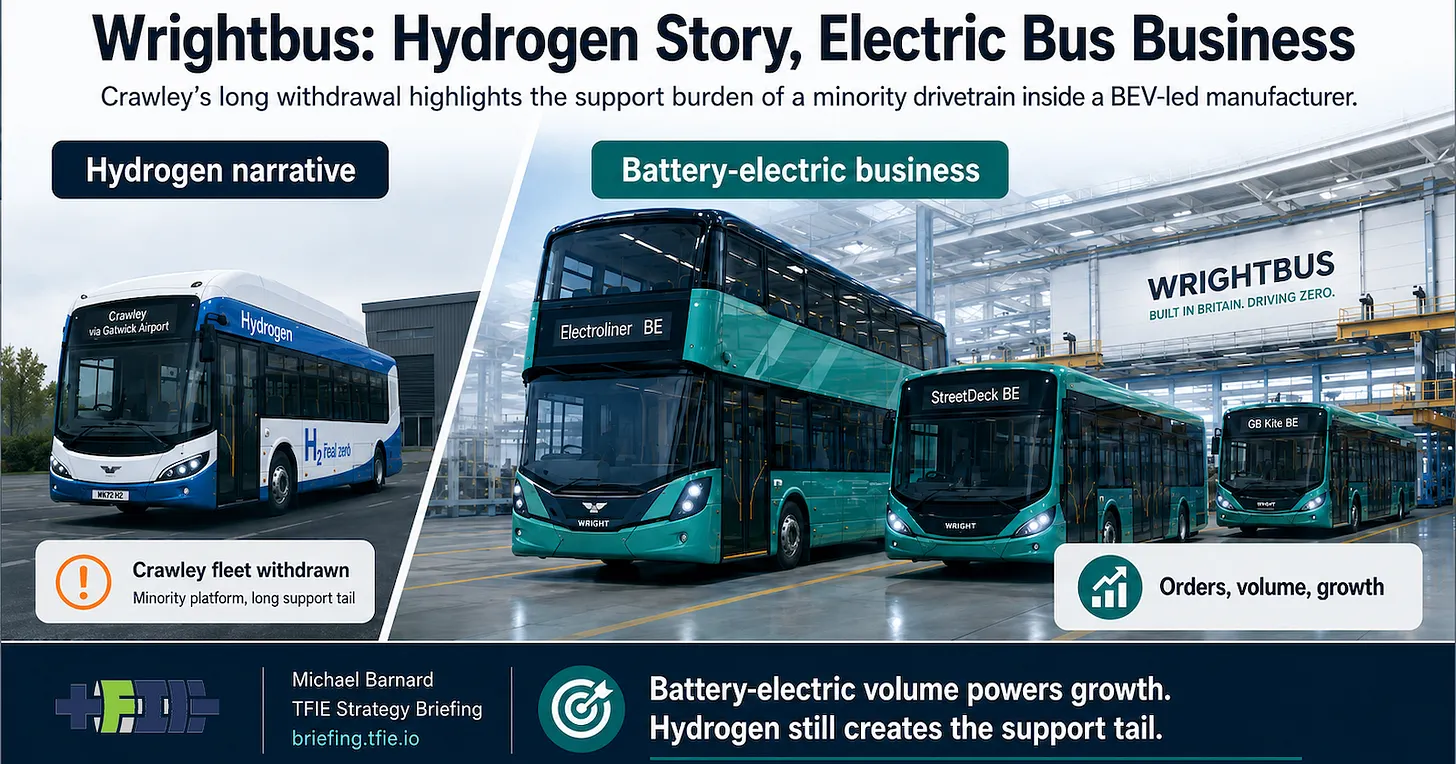
A hydrogen bus fire in Crawley, UK, has exposed operational weaknesses that hydrogen advocates often gloss over. The incident illustrates why transit operators increasingly favor battery-electric buses over hydrogen fuel cell vehicles, despite years of hydrogen industry promotion.
The Wrightbus hydrogen fire itself warrants a full investigation before drawing conclusions about the technology's safety profile. However, the event underscores a deeper problem hydrogen transit faces: small hydrogen fleets require disproportionately large operational infrastructure. Fueling stations, maintenance protocols, and technician training for a handful of buses demand investments comparable to those needed for far larger electric fleets.
Battery-electric buses have demonstrated different economics. They charge at depots using existing electrical infrastructure. Maintenance is simpler. Spare parts networks are maturing. Cities deploying electric buses at scale report predictable operating costs and improving reliability metrics.
Wrightbus, a major UK bus manufacturer, has shifted its product strategy toward electric vehicles. This reflects market reality. Transit agencies from London to Los Angeles have committed billions to electrification, not hydrogen. The technology's advocates promised hydrogen would dominate urban transit by 2030. That timeline has passed.
Several factors explain the electric advantage. Battery costs have fallen 89 percent over the past decade, according to Bloomberg NEF analysis. Hydrogen production remains energy-intensive, with 95 percent still derived from natural gas reforming, which releases carbon emissions. Creating a nationwide hydrogen refueling network requires infrastructure investment that cities lack budget for.
The Crawley incident serves as a data point in a longer commercial story. Hydrogen has found niche applications in heavy trucking and industrial processes. Transit fleets, however, represent a different use case. The math favors batteries for buses that operate fixed routes and return to central depots daily.
UK transport policy continues supporting electric bus procurement through grants and charging infrastructure funding. The Department