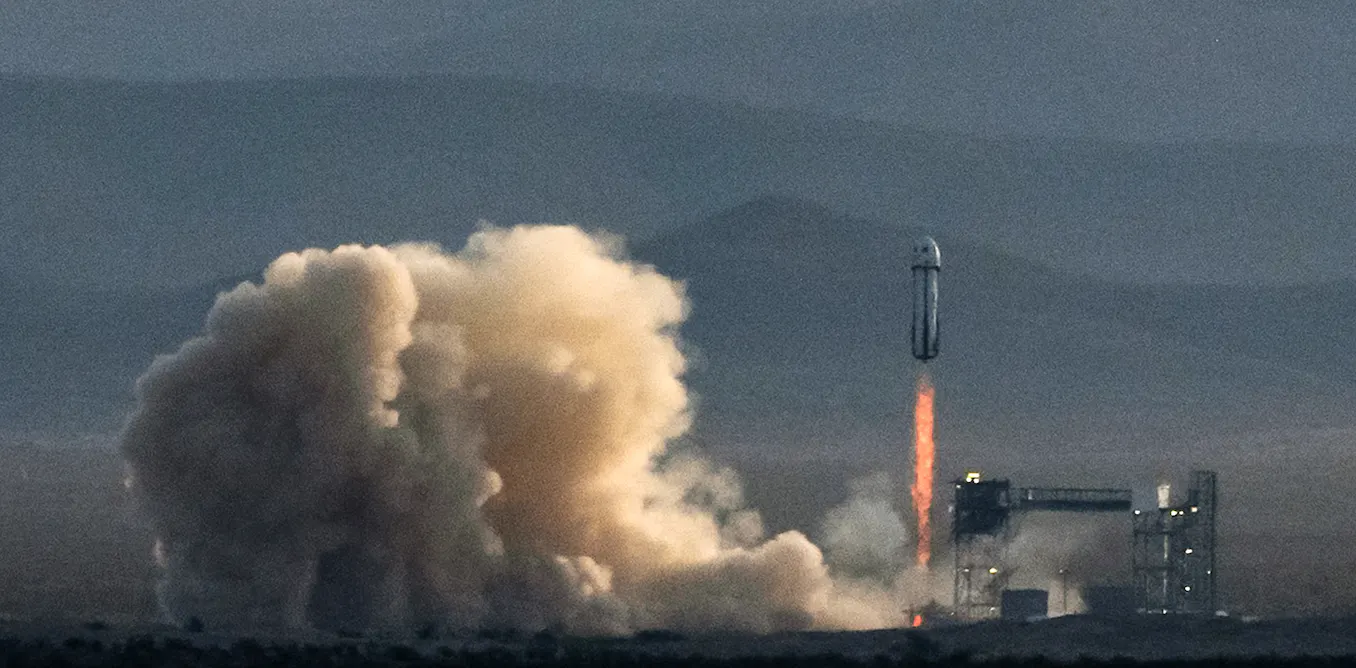
Commercial space tourism is expanding rapidly, with private operators launching rockets and carrying passengers at unprecedented rates. Yet the legal framework governing these activities dates to the 1960s, creating a regulatory gap that threatens environmental protection and safety standards.
The Outer Space Treaty of 1967 remains the foundational international agreement, drafted when space travel was confined to government programs. It assigns liability to nations for activities within their borders, including private launches. This framework does not address the realities of modern space tourism. Companies like Blue Origin, Virgin Galactic, and SpaceX now conduct regular commercial flights, but no comprehensive rules govern passenger safety, debris management, or atmospheric impacts.
Suborbital flights—which cross the boundary to space but do not reach orbital velocity—occupy a legal grey zone. The U.S. Federal Aviation Administration (FAA) oversees commercial spaceport licenses but does not apply the same safety regulations used in aviation. Passengers sign liability waivers that shield operators from accountability. Other nations have adopted minimal oversight or none at all.
Environmental concerns mount as launch frequency increases. Rocket emissions release carbon dioxide, soot, and nitrogen oxides into the stratosphere. A 2021 study in Geophysical Research Letters found that soot particles from solid rocket boosters can damage the ozone layer. Scientists warn that a significant expansion of the industry could offset gains from clean energy transitions.
Space debris presents another unregulated hazard. Spent rocket stages and defunct satellites create collision risks for active spacecraft and the International Space Station. The 1967 treaty addresses debris responsibility only after objects return to Earth.
Industry advocates argue that existing regulations suffice and that overregulation will stifle innovation. Operators in the United States, United Kingdom, and other nations point to market competition as a safety incentive. Environmental scientists counter that market forces alone cannot address atmospheric and orbital impacts affecting the entire planet.