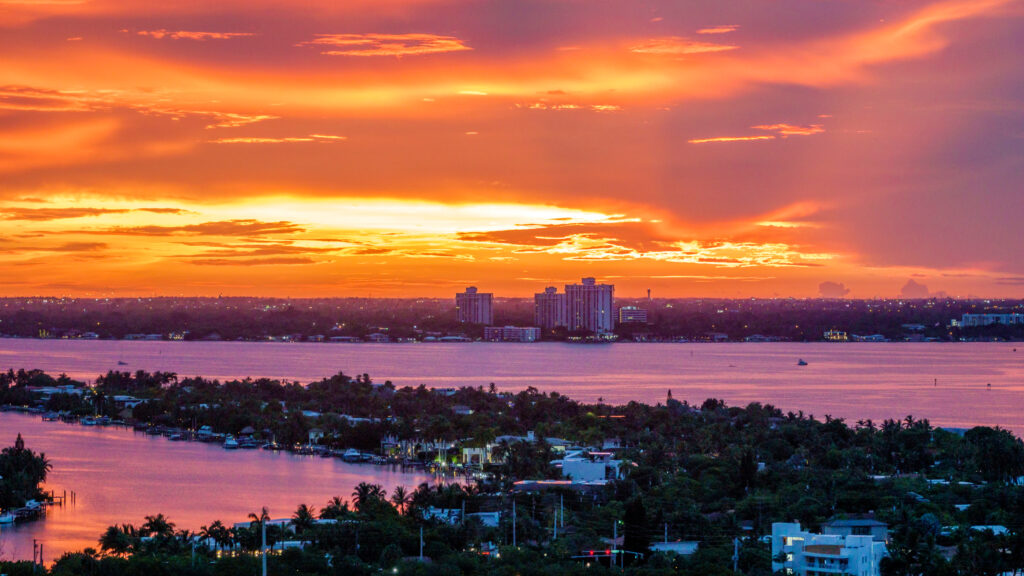
Miami's Biscayne Bay hosts one of the Atlantic's most vital nurseries for imperiled sharks and sawfish, yet the shallow waters face mounting threats from saltwater intrusion linked to sea-level rise and land subsidence.
Juvenile great hammerhead sharks, classified as critically endangered by the International Union for Conservation of Nature, spend their first two years in Biscayne Bay's turbid shallows before migrating to open ocean. The same nursery shelters critically endangered sawfish, whose populations have collapsed across the Atlantic and Gulf of Mexico. A recent capture of a 12-foot sawfish underscores the bay's outsized importance for species recovery.
Saltwater intrusion now extends deeper inland through the limestone aquifer underlying South Florida, contaminating freshwater supplies and altering the salinity gradients that these juvenile fish depend on for survival. Sea-level rise accelerates this process. The U.S. Geological Survey has documented subsidence rates in parts of Miami-Dade County exceeding one-quarter inch annually, compounding the saltwater encroachment problem.
The bay's condition reflects broader challenges facing nursery habitats worldwide. Juvenile sharks require specific salinity ranges, water temperatures, and prey availability. Changes to any parameter threaten their survival rates during the critical first years of life.
Researchers working with the University of Miami and state agencies continue monitoring the populations, but concrete restoration efforts remain limited. The bay faces additional pressures from boat traffic, coastal development, and nutrient runoff that fuels harmful algal blooms.
Biscayne Bay's transformation illustrates how climate-driven changes compound with local stressors to degrade ecosystem function. Without intervention to address saltwater intrusion and habitat degradation, the endangered species that depend on these shallow waters face further population decline.