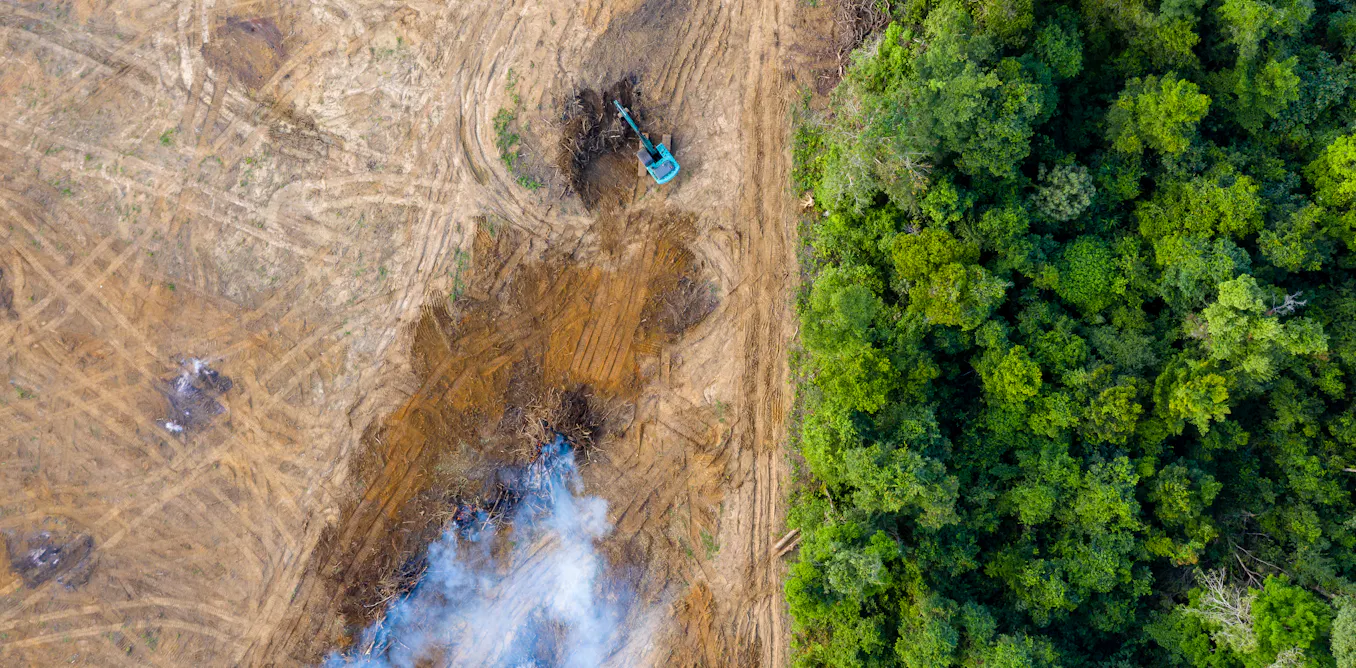
Amazon deforestation rates have dropped significantly, driven primarily by enhanced monitoring systems and stricter enforcement mechanisms. Brazil's environmental agency INPE and satellite-based surveillance networks have improved detection and prevented illegal logging operations across protected areas. The decline represents measurable progress in protecting the world's largest tropical forest, which stores roughly 150 to 200 billion tons of carbon.
However, this trajectory faces genuine threat from pending legislation in Brazil's Congress. A proposed bill would restrict the authority of environmental enforcement agencies, particularly limiting their capacity to conduct on-site inspections and issue fines for violations. Such measures would directly undermine the enforcement infrastructure responsible for recent gains.
The stakes extend beyond Brazil's borders. The Amazon generates approximately 20 percent of global oxygen and regulates rainfall patterns across South America. Deforestation accelerates regional climate disruption and pushes the forest toward a tipping point where it transitions from carbon sink to carbon source, releasing stored carbon rather than absorbing it.
Cattle ranching and agricultural expansion remain the primary drivers of forest loss. Monitoring has proven effective because visible satellite imagery combined with rapid response teams creates consequences for illegal clearing. Remove or weaken those enforcement mechanisms, and deforestation pressure will resurge immediately.
Environmental groups and climate scientists warn that legislative rollback of enforcement powers contradicts Brazil's climate commitments under the Paris Agreement. The country pledged to eliminate illegal deforestation by 2030 while reducing overall forest loss. Restricting agency authority reverses that commitment.
The current moment represents a critical inflection point. Technical solutions for monitoring exist and function. Political will to maintain enforcement capacity determines whether recent progress holds or collapses. Without sustained enforcement, deforestation will accelerate within months, undoing years of conservation effort and releasing carbon stored across decades.