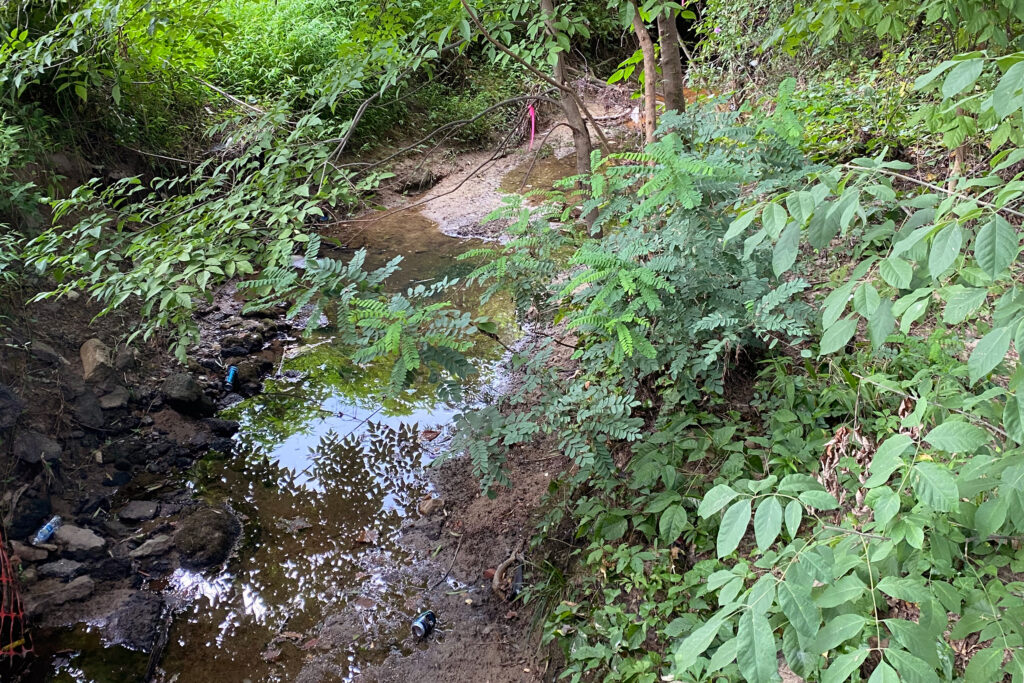
North Carolina's Department of Environmental Quality filed suit against a Durham chemical company for decades of industrial pollution flowing into a neighborhood creek. The facility discharged acetone, ethanol, 1,4-dioxane, and unidentified substances into the waterway, which runs directly behind an elementary school and through a public park in a predominantly Black residential area.
State regulatory documents reveal the company operated a chemical repackaging and distribution facility while releasing high levels of toxic chemicals into the creek for years. The discharge pattern shows persistent violations despite regulatory oversight. The creek's contamination poses exposure risks to children attending the nearby school and residents using the adjacent park.
1,4-dioxane stands out as a particular concern. The Environmental Protection Agency classifies the compound as likely carcinogenic. It persists in water and soil, resisting standard water treatment methods. The chemical's presence indicates either intentional discharge or inadequate containment systems at the facility.
The lawsuit represents enforcement action after years of documented violations in state files. Environmental regulators documented the pollution but legal action became necessary when voluntary compliance failed. The case reflects a broader pattern in North Carolina where industrial facilities in or near low-income communities and communities of color generate disproportionate pollution burdens.
The creek's location makes the contamination particularly damaging. Direct exposure occurs through children's recreation in the park and potential groundwater migration toward residential wells. The discharge timing matters as well. Decades of continuous exposure creates cumulative health risks that acute violations would not.
The company faces liability for remediation costs and potential penalties. State prosecutors must prove the discharge violated environmental permits or state water quality laws. The case's outcome will determine whether the facility must install treatment systems, cease operations, or pay damages to affected residents and the state.
This enforcement action tests North Carolina's commitment to addressing environmental inequities. The predominantly Black neighborhood's location relative to industrial pollution mirrors national patterns where facilities cluster