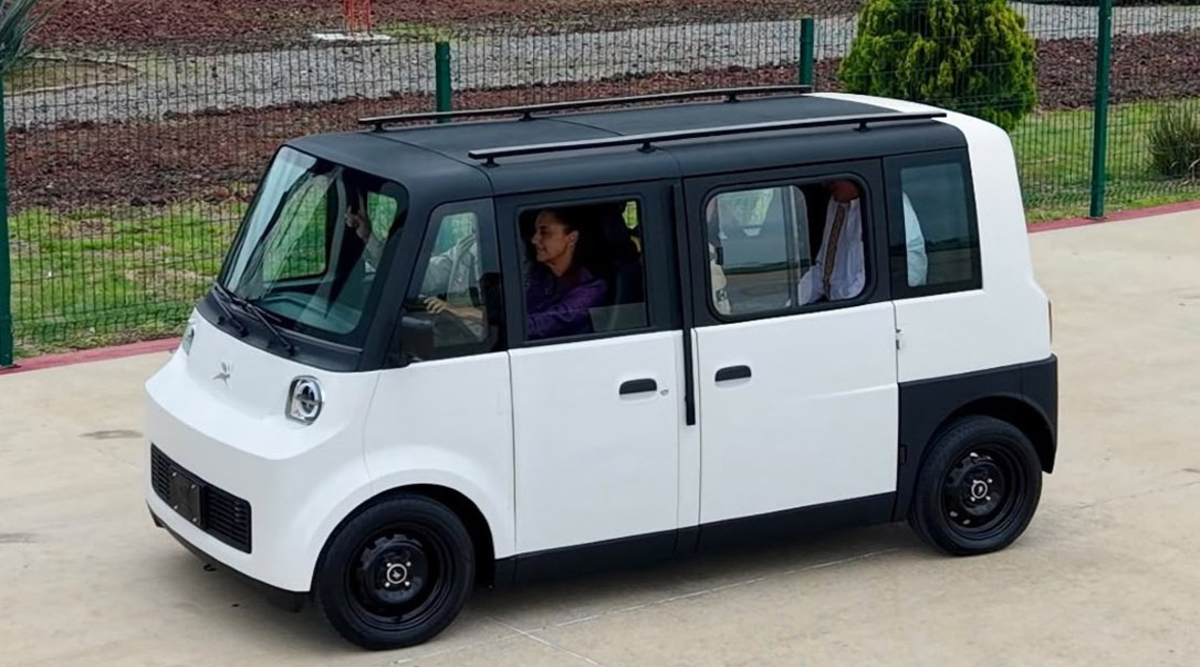
Mexico has unveiled the Olinia Uno, a low-speed electric vehicle designed as affordable transportation for commercial users. The vehicle will enter production later this year at a starting price of $8,600.
The Olinia Uno targets Mexico's "coche del pueblo" (people's car) market, positioning itself as an accessible entry point into electric mobility for commercial operators who cannot afford conventional passenger vehicles. Low-speed electric vehicles occupy a specific niche in emerging markets, offering practical utility for short-distance delivery, local commerce, and small business operations at a fraction of conventional EV costs.
The $8,600 price point undercuts most battery electric vehicles on the global market. This pricing strategy addresses a documented gap in Mexico's transportation options, where informal sector workers and small business owners often rely on aging, high-emission vehicles. By offering an affordable electric alternative, Mexico aims to reduce transport emissions while supporting economic activity in underserved communities.
Production beginning this year signals Mexico's growing role in EV manufacturing beyond the major automakers already operating factories there. The country has attracted significant battery and vehicle assembly investment in recent years, positioning itself as a regional EV hub. This domestic production capacity enables price competitiveness critical for mass-market adoption in price-sensitive markets.
Low-speed electric vehicles typically operate at speeds of 40-50 kilometers per hour, suitable for urban and rural delivery routes but not highway driving. This design choice reduces manufacturing complexity and battery requirements compared to full-speed EVs, directly supporting the lower price.
Mexico's vehicle emissions contribute roughly 28 percent of the country's transportation sector greenhouse gas output. Replacing aging commercial vehicles with electric alternatives addresses a significant pollution source while supporting air quality improvements in Mexico's heavily congested urban areas.
The Olinia Uno launch reflects broader Latin American efforts to democratize electric vehicle access. Similar affordable EV programs have emerged in Brazil and other