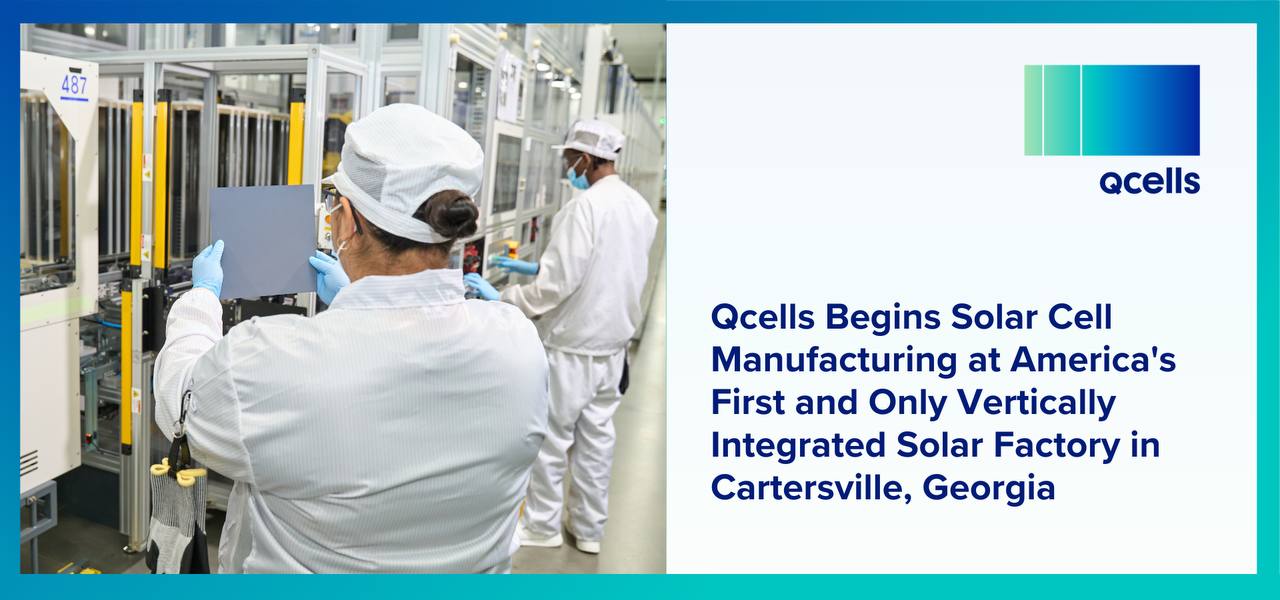
Qcells has begun manufacturing solar cells at its Cartersville, Georgia facility, marking a milestone for U.S. solar production capacity. The factory represents the largest solar cell manufacturing operation in the country and will function as a vertically integrated production hub, combining cell and module manufacturing under one roof.
The facility expands domestic solar supply chains at a time when the U.S. solar industry faces supply constraints. Qcells' investment reflects growing demand for American-made solar components, driven partly by federal incentives under the Inflation Reduction Act and domestic content requirements for federal projects.
Vertically integrated manufacturing allows Qcells to control quality and efficiency across the production chain. The company produces both solar cells, which convert sunlight into electricity, and finished solar modules that bundle cells together for installation. This integration reduces transportation costs and supply chain vulnerabilities while potentially lowering manufacturing expenses.
The Georgia facility joins a wave of solar manufacturing expansion across the Southeast. Other companies have announced plans to establish production facilities in the region, capitalizing on lower energy costs and federal tax credits for domestic manufacturing.
Ramping up U.S. solar cell production addresses a critical dependency. Currently, the country relies heavily on imported cells, primarily from Asia. Building domestic capacity strengthens energy independence and supports the nation's renewable energy deployment targets. The U.S. solar industry installed a record 42.6 gigawatts of capacity in 2023 and continues expanding.
Qcells' Georgia operation employs hundreds of workers and generates state tax revenue. The company has committed substantial capital to the facility, betting that tariffs and incentive structures favor American manufacturing over imports.
Production scaling matters for cost competitiveness. As U.S. manufacturers increase volume, unit costs typically decline, making solar installations more affordable for residential and commercial customers. This directly affects how quickly utilities and businesses transition from fossil fuels.