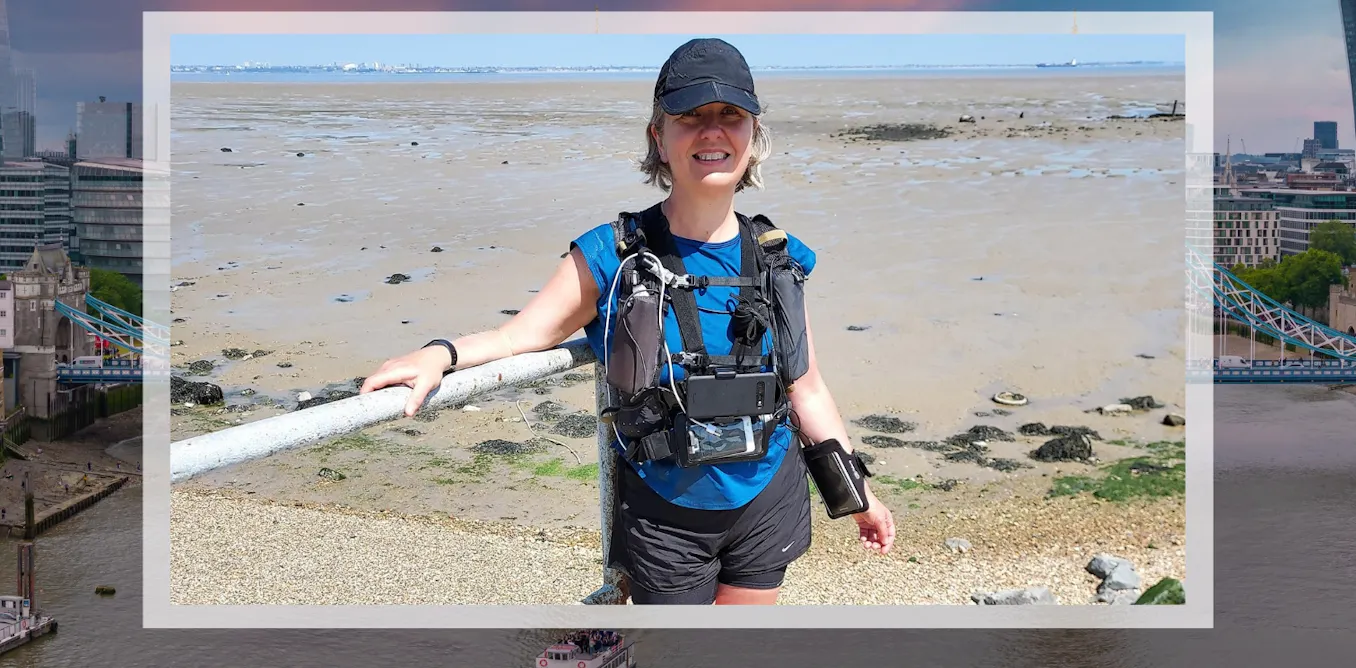
A runner traced the Thames River's entire course from its Cotswold springs to the North Sea over 14 consecutive days, documenting the waterway's condition and transformation across 215 miles of English landscape.
The journey revealed the river's ecological state at multiple points. Starting in the rural Cotswolds, where the Thames emerges as a modest stream, the runner encountered stretches of clear water and diverse riparian habitat. Moving eastward through agricultural land, the water quality deteriorated noticeably. Sediment loads increased, and vegetation patterns shifted as farming runoff entered the system.
Downstream from London, the tidal influence became dominant. Salinity rose, affecting which species could survive. The runner documented sections where urban pollution visibly impacted the river's appearance and ecology. Concrete barriers replaced natural banks in many urban areas, restricting flood plains and altering habitat connectivity.
The continuous 14-day run generated observations about water flow patterns, temperature changes, and the cumulative effect of human infrastructure. Weirs and locks fragmented the river ecosystem, limiting fish migration and sediment transport. Industrial sites and sewage treatment plants discharged effluent that altered chemical composition downstream.
The Thames watershed supports over 15 million people. Its health depends on managing multiple pressures simultaneously: agricultural intensity, urban development, climate change, and aging water infrastructure. The river faces particular vulnerability during high-rainfall events when sewage systems overflow into the water.
The journey illustrated how a single river integrates impacts across an entire region. Decisions made in rural Gloucestershire affect conditions in urban London and the estuary. Restoration efforts on fragmented sections cannot succeed without addressing upstream sources. The runner's first-hand account demonstrates that understanding river condition requires observing the entire system as an interconnected whole, not isolated segments.