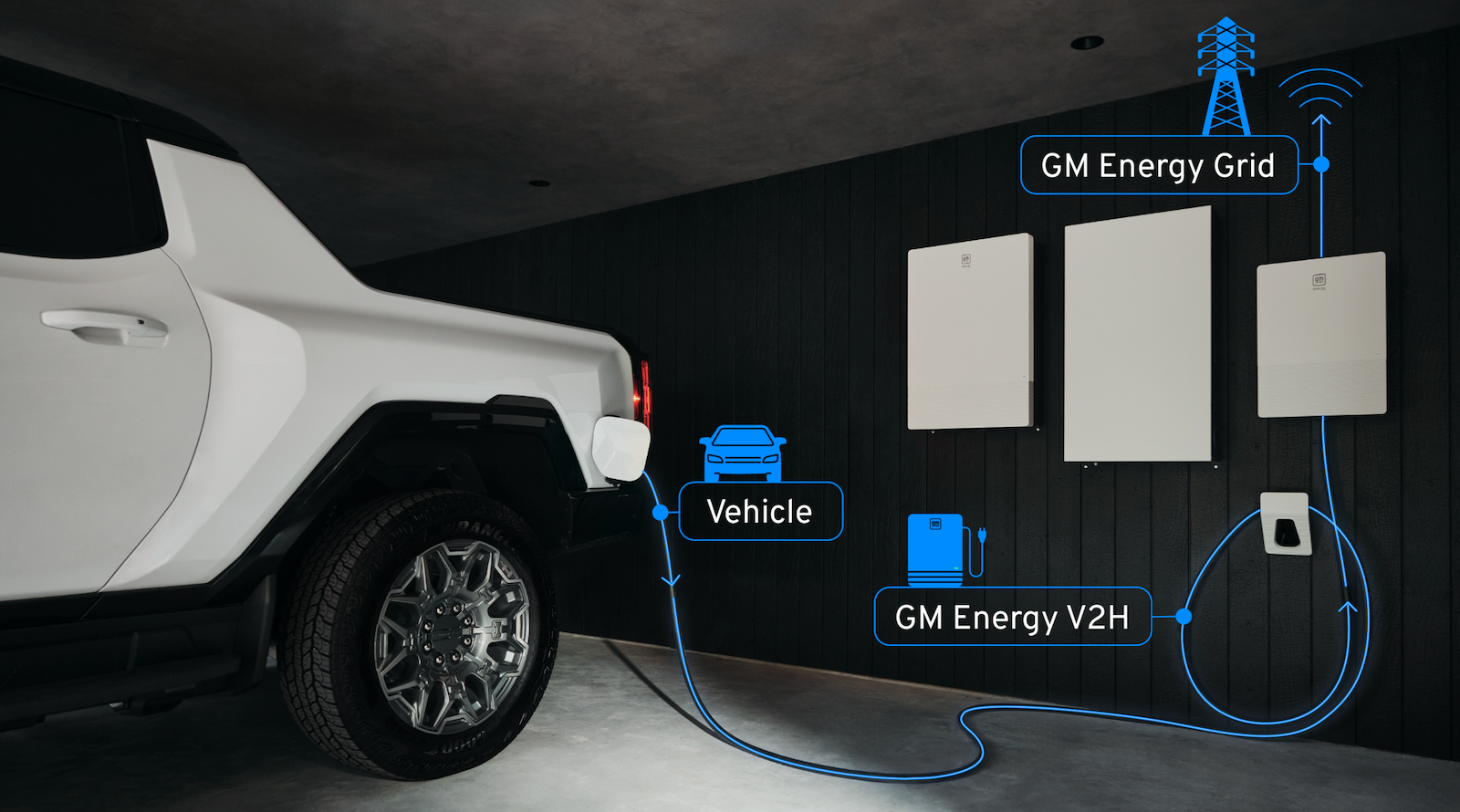
General Motors activated vehicle-to-grid technology for existing electric vehicle owners without requiring new hardware installations. The capability allows EV batteries to discharge power back into electrical grids during peak demand periods, transforming parked vehicles into distributed energy resources.
GM announced the V2G rollout at a San Francisco event on June 9, positioning the deployment as a major step toward grid stabilization. The automaker's approach eliminates barriers that typically slow V2G adoption. Existing customers gain access through software updates alone, removing installation costs and complexity that have hindered broader deployment of bidirectional charging infrastructure.
Vehicle-to-grid technology addresses growing grid strain as renewable energy penetration increases. EVs sitting idle for most hours represent untapped storage capacity. During peak demand or when renewable generation dips, these batteries can supply power back to the grid, reducing reliance on fossil fuel peaking plants and lowering electricity costs for participating vehicle owners.
GM simultaneously announced expansion of grid-scale battery storage through sodium-ion technology. This signals the automaker's dual strategy. While V2G leverages existing fleet assets, sodium-ion batteries offer a complementary stationary storage solution. Sodium-ion chemistry avoids lithium supply chain constraints and provides lower costs, making large-capacity grid storage more economically viable.
The V2G activation represents a scaling inflection point. Previous V2G pilots remained limited by hardware requirements, limited vehicle compatibility, and lack of grid operator demand response programs. By eliminating new hardware needs, GM reduces friction for participation while accessing millions of connected vehicles already equipped with compatible bidirectional chargers.
Broader adoption hinges on grid operator readiness, regulatory clarity, and customer incentive structures. Several regional grid operators have launched V2G pilot programs, but standardized protocols and compensation mechanisms remain incomplete across most U.S. markets. GM's move applies pressure on utilities and regulators to operationalize