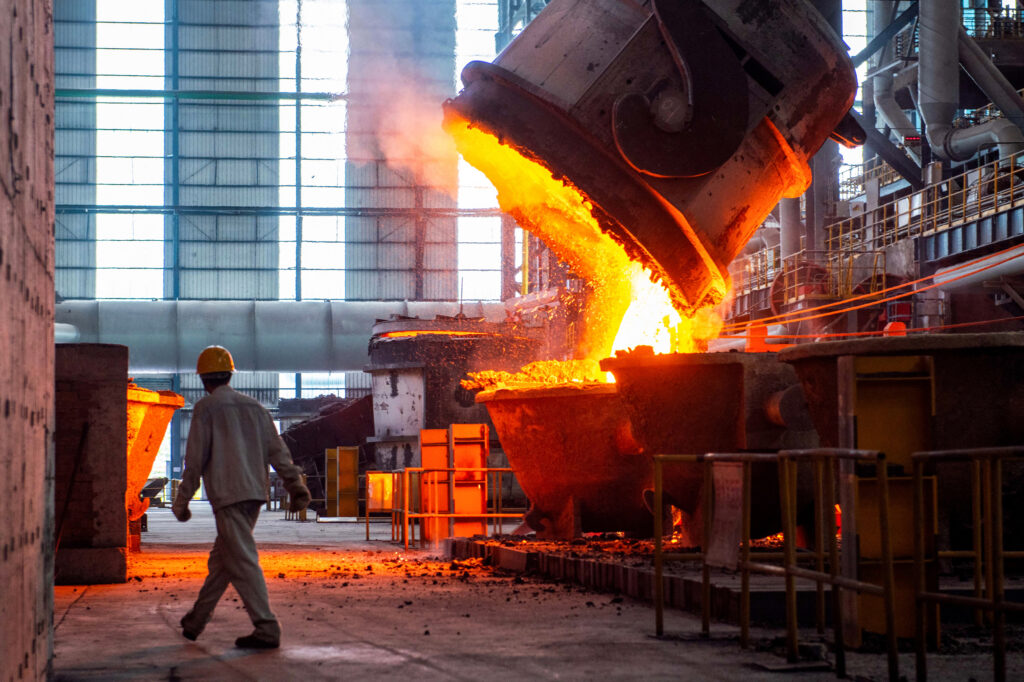
China's Belt and Road Initiative, a sprawling infrastructure program spanning over 130 countries, generates massive greenhouse gas emissions concentrated in a single material: steel. Two new studies found that more than half the initiative's climate impact comes from steel production, with the vast majority manufactured in China before export to Belt and Road project sites.
The research underscores a structural problem in global infrastructure development. Steel production accounts for roughly 8 percent of worldwide carbon dioxide emissions annually. China's mills, often running on coal power, emit at higher rates than facilities in developed nations. As Belt and Road projects—roads, railways, ports, dams—expand across Asia, Africa, and Latin America, they lock in decades of emissions tied to carbon-intensive Chinese steel.
The studies identified a clear pathway forward. Stronger environmental policies within China could force steel manufacturers to adopt cleaner processes. Simultaneously, Belt and Road-participating nations could impose emissions standards for imported materials or demand low-carbon alternatives. Investment in green steel technologies, including electric arc furnaces powered by renewable energy and hydrogen-based production methods, remains underdeveloped and capital-intensive.
Beijing has not announced specific targets to decarbonize Belt and Road construction. The initiative continues expanding despite China's 2060 carbon-neutrality pledge. This disconnect reveals a tension in Chinese climate strategy: domestic commitments to net-zero emissions exist alongside continued financing of carbon-heavy overseas infrastructure.
The climate cost extends beyond immediate construction. Completed Belt and Road projects—coal plants, highways, shipping routes—perpetuate fossil fuel dependence in partner nations. A road built with high-carbon steel shapes transportation patterns for decades. Steel plants in partner countries, often financed through Belt and Road mechanisms, operate on coal power.
Experts argue that retrofitting the initiative requires action at multiple levels. Chinese policymakers could mandate low-carbon steel in Belt and Road contracts. International development