Butter and margarine differ fundamentally in their fatty acid composition, producing measurable effects on baking outcomes.
Butter contains primarily short and medium-chain fatty acids alongside long-chain fats. Margarine, produced from vegetable oils, contains predominantly long-chain polyunsaturated and monounsaturated fatty acids. These structural variations alter melting points and behavior during the baking process.
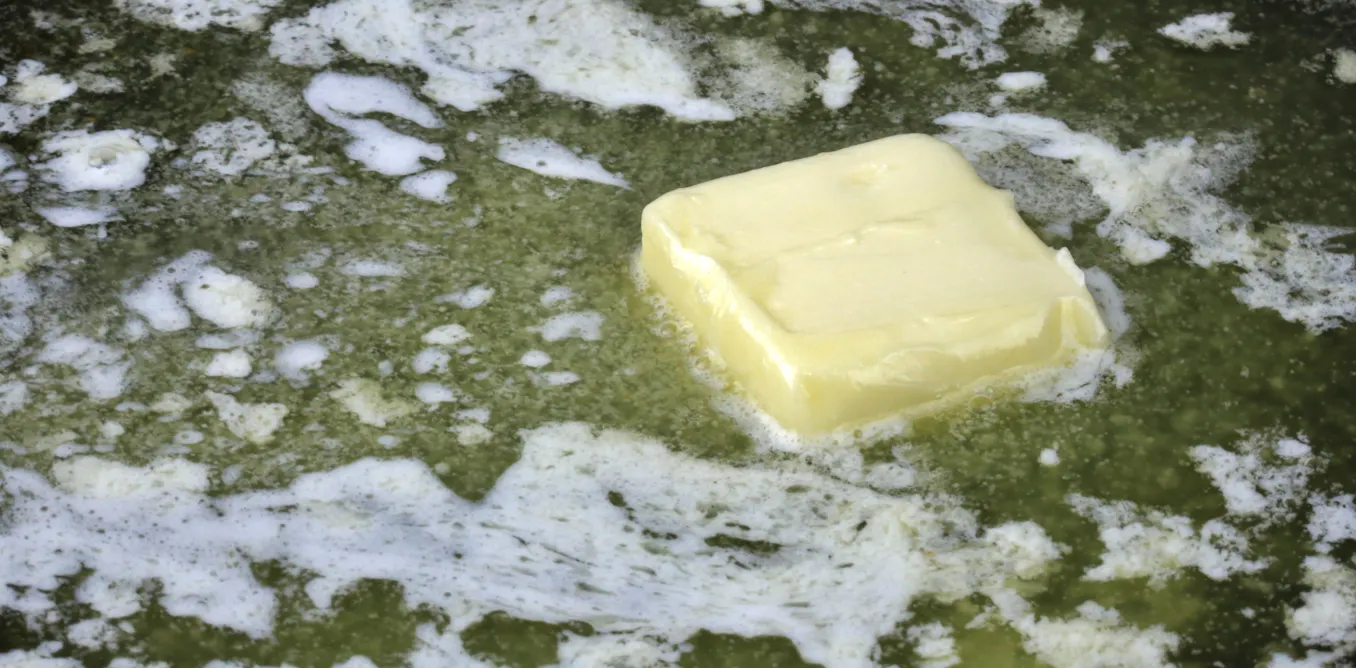
Butter melts around 90-93 degrees Fahrenheit, creating distinct temperature zones within dough. The water content in butter, typically 15-20 percent, generates steam during baking that creates lift in cakes and pastries. This moisture interacts with gluten development differently than margarine's formulation.
Margarine melts at higher temperatures due to its long-chain fatty acid profile. Its composition often includes added emulsifiers and stabilizers to replicate butter's properties. These additives prevent the separation that would naturally occur in vegetable oil-based spreads. The reduced water content in margarine produces denser, less tender crumbs in some applications.
For laminated doughs like croissants and puff pastry, butter's lower melting point creates more distinct layer separation. Margarine's slower melting can result in less defined flaking. Cookie dough responds differently too. Butter produces spread and browning that margarine may not replicate identically due to the different rates at which each fat distributes through dough.
The flavor compounds in butter, including butyric acid and various volatile organic compounds, directly affect taste. Margarine lacks these naturally occurring flavoring agents, though some manufacturers add dairy flavoring to bridge this gap.
Substituting one for the other in recipes requires understanding these chemical properties. One-to-one replacement often fails in precision baking. Cakes may dry out. Cookies may not set properly.