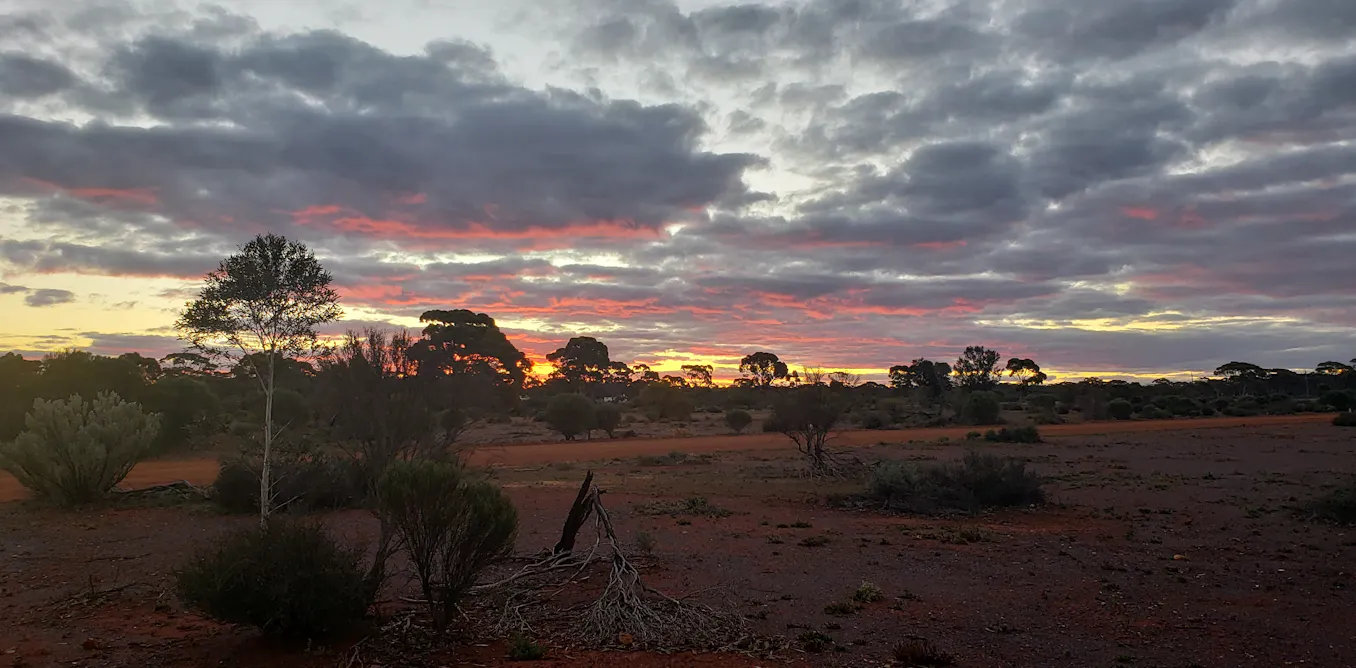
A meteorite impact in Western Australia may have concentrated gold deposits in ways previously attributed to geological processes alone, according to new research. The study examines how extraterrestrial impacts can redistribute precious metals at the surface and depth, fundamentally altering ore distribution in gold-rich regions.
Western Australia's Yilgarn Craton, one of the world's most productive goldfields, contains concentrations that scientists now link to asteroid or meteorite collisions. When a space rock strikes Earth at high velocity, the resulting shock waves and thermal energy can remobilize subsurface gold and other metals. This process pushes mineralized fluids upward, concentrating gold in new locations and potentially enriching existing ore bodies.
The research suggests that impact events may explain anomalously rich gold zones that conventional models struggle to account for. Rather than solely relying on hydrothermal circulation from deep geological heat sources, meteorite impacts provide an additional mechanism for gold concentration at the surface and in accessible ore zones.
This finding carries economic implications. Australia's mining industry depends heavily on accurate geological models to locate and extract gold efficiently. Understanding impact-driven concentration helps prospectors identify high-yield zones that might otherwise remain undiscovered. The Yilgarn Craton alone has yielded over 60 million ounces of gold historically.
The study integrates impact crater geology with ore deposit analysis, examining shock mineral signatures and fluid flow patterns consistent with meteorite collisions. Researchers compared these patterns against deposits formed through standard hydrothermal processes, identifying distinctive markers of impact-related concentration.
Western Australia experienced multiple large impact events throughout its geological history. Crater structures in the region provide evidence of collisions capable of triggering the metal redistribution documented in this research. The findings suggest that impact events warrant inclusion in future mineral exploration strategies.
This work bridges planetary science and economic geology. As mining companies seek new resources in