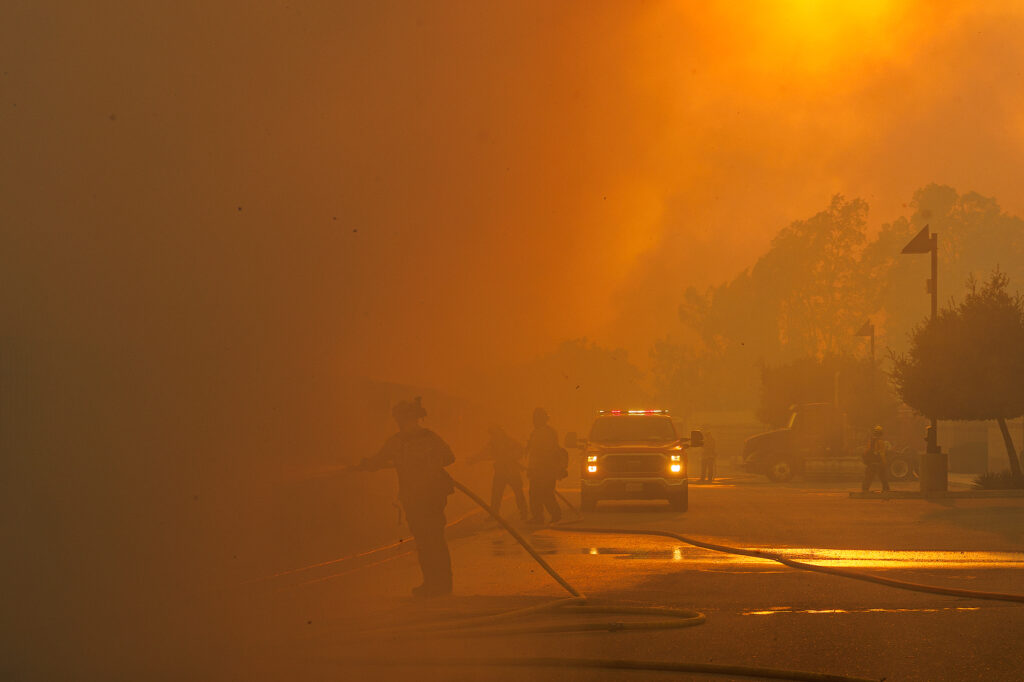
Wildfires have erased roughly four years of air quality improvements across the United States, according to new research from the University of [institution name]. Surface ozone, or smog, rose consistently between 2015 and 2024, with deterioration concentrated in the Midwest and Western regions.
The study quantifies a mounting problem that federal regulators have struggled to address. Ground-level ozone forms when wildfire smoke mixes with other pollutants and sunlight. Unlike stratospheric ozone that shields Earth from ultraviolet radiation, surface ozone damages human lungs and aggravates respiratory disease. The Environmental Protection Agency sets air quality standards that states must meet, but wildfire pollution increasingly pushes regions out of compliance.
The finding arrives as wildfire seasons lengthen and burn areas expand. Climate change extends fire seasons by weeks, dries vegetation, and creates conditions for more intense burns. Larger fires produce more smoke that travels hundreds of miles, degrading air quality far from burn zones. States in the West and Midwest that had reduced ozone through industrial controls and vehicle emission standards now face pollution driven by factors largely outside their regulatory authority.
This creates a regulatory paradox. Federal ozone standards require states to cut emissions from cars, factories, and power plants. Yet wildfire smoke, which the EPA does not count as an emissions violation from industry, can overwhelm those gains in a single fire season. Scientists say the agency's current framework fails to account for pollution sources tied to climate change.
The research underscores how climate impacts cascade through environmental systems. Hotter temperatures and longer droughts feed wildfires, which degrade air quality decades after major pollution sources were controlled. Public health consequences follow. Ground-level ozone exposure causes premature deaths and emergency room visits for asthma and other lung conditions, with effects concentrated in low-income communities near highways and industrial zones.