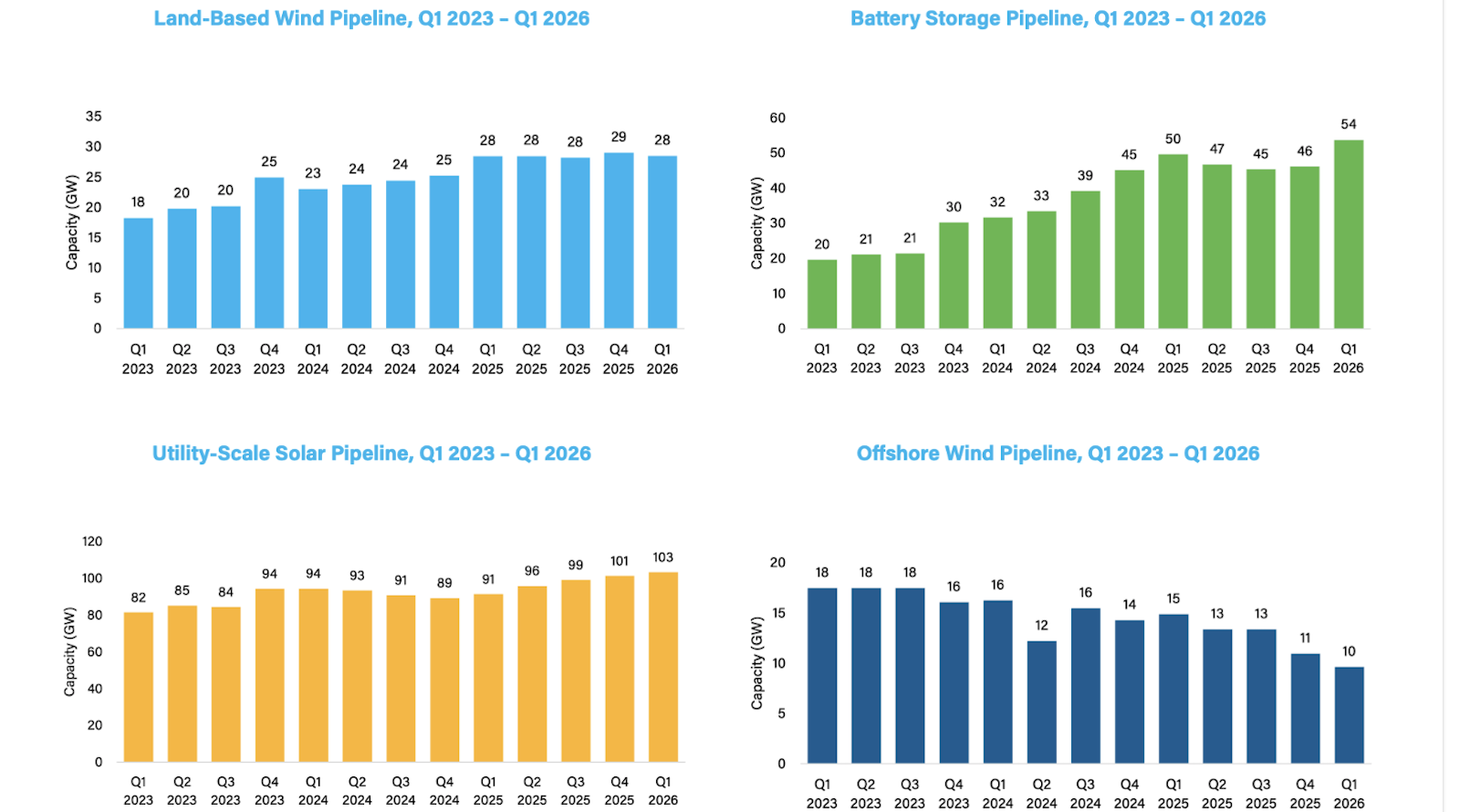
U.S. clean energy infrastructure has reached capacity to power approximately 80 million homes, driven by expanding solar and battery storage pipelines across the country. This growth persists despite reduced government subsidies for solar installations nationally and in California, the nation's leading solar state.
The expansion reflects fundamental economics rather than policy support alone. Solar energy and battery storage have become cost-competitive with fossil fuels on their own merits, eliminating dependency on government incentives as the primary driver for deployment. Utilities and developers continue building capacity because the technology delivers returns without subsidy props.
Current operational solar and battery projects, combined with those in development, demonstrate the sector's capacity to supply roughly equivalent power to what 80 million American households consume annually. This figure underscores the scale of the clean energy transition underway. The pipeline remains robust despite policy shifts, suggesting market forces have taken over from government backing.
The decline in subsidies coincides with grid modernization efforts and technological maturation in the renewable sector. Lower manufacturing costs, improved installation efficiency, and storage innovations have compressed the cost curve. Developers now compete on fundamentals. California's reduced support reflects confidence that solar has matured beyond needing protection from policy volatility.
Battery storage growth proves especially significant. Storage systems address intermittency challenges that once limited solar's grid contribution. With storage expanding alongside solar capacity, the grid gains flexibility to absorb variable generation and dispatch power when demand peaks.
The 80-million-home metric carries implications for grid planning. Utilities must integrate this volume of distributed and utility-scale generation while maintaining reliability. Transmission upgrades, grid modernization software, and demand-response programs become prerequisites for unlocking the full potential of available capacity.
This trajectory positions the U.S. on pace to meet federal decarbonization targets, though infrastructure and policy challenges remain. The clean energy pipeline's resilience despite subsidy reductions validates the