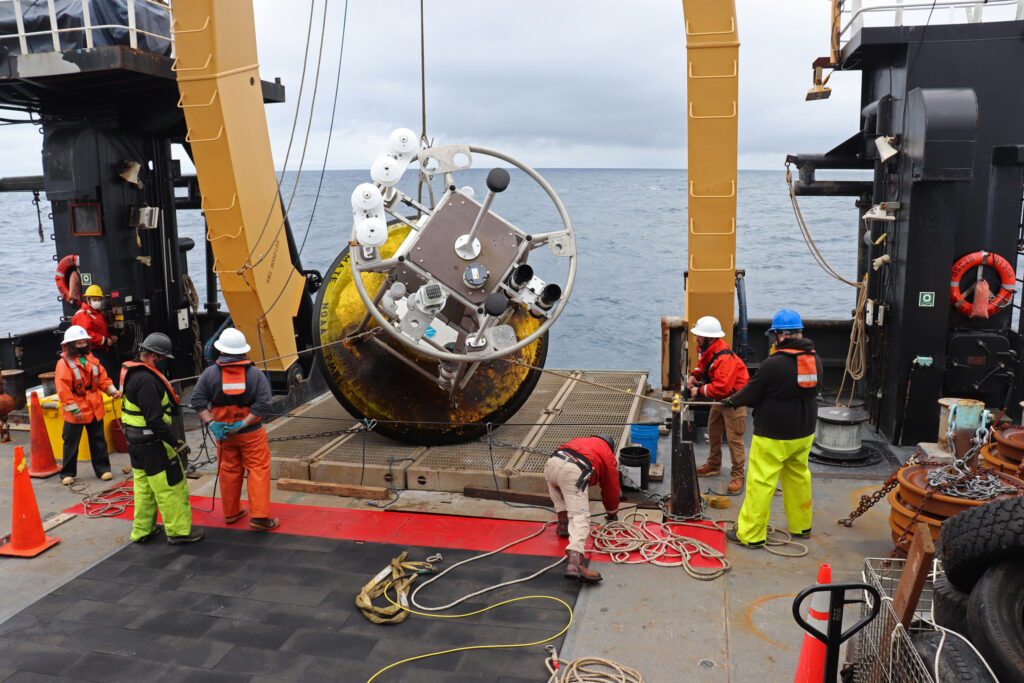
Alaska faces the loss of critical ocean monitoring infrastructure as the National Science Foundation prepares to decommission the Ocean Observatories Initiative, a $368 million network tracking deep-ocean conditions. The decision strikes at the foundation of fisheries management in the nation's top fish-producing state, where waters warm at double the global rate.
The Observatory Initiative deployed sensors across Alaska's coastal and deep waters, collecting real-time data on temperature, salinity, oxygen levels, and currents. Fisheries managers, researchers, and industry representatives relied on this information to understand how rapidly changing ocean conditions affect salmon, pollock, and other commercial species worth billions annually.
Alaska's waters have warmed significantly faster than global oceans. This accelerated heating alters marine ecosystems, shifts fish migration patterns, and threatens the livelihoods of fishing communities across the state. The monitoring system provided early warning signals of these shifts, allowing managers to adjust fishing regulations and fishermen to adapt practices.
The NSF's May announcement triggered pushback from Alaska's scientific and fishing communities. Losing the observatories removes the most comprehensive real-time view of Gulf of Alaska and Bering Sea conditions. Researchers expressed concern that replacing the network would prove extremely difficult and expensive, and that data gaps could persist for years.
Alternative monitoring approaches exist but carry limitations. Satellite systems cannot penetrate deep ocean layers where critical processes occur. Traditional research cruises collect data but lack the continuous observation the Initiative provided. Autonomous vehicles and buoys offer partial solutions but require separate funding mechanisms.
The decommissioning reflects budget constraints at NSF rather than scientific disagreement about the monitoring system's value. The agency faces competing demands across research disciplines. Maintaining the Initiative's infrastructure through its original timeline requires sustained funding the NSF cannot currently commit.
Alaska's congressional delegation and state officials have begun advocating for funding solutions. The transition period remains unclear, leaving a