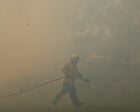
Wildfire smoke has erased a decade of U.S. air quality gains, according to research published in Science on Thursday. Since 2015, fires have reversed progress toward meeting federal ozone standards, negating years of emissions reductions achieved through Clean Air Act enforcement and industrial regulations.
Ground-level ozone forms when nitrogen oxides and volatile organic compounds react in sunlight. Wildfire smoke releases both precursor chemicals at high concentrations. The study documents that smoke-driven ozone pollution has outpaced the steady gains the Environmental Protection Agency achieved from 2005 to 2015 by tightening vehicle emissions standards and limiting power plant pollution.
The research underscores how climate-driven fire expansion overwhelms localized pollution controls. As western U.S. fire seasons have intensified and extended, smoke plumes now travel across state lines and regions, creating ozone spikes that exceed National Ambient Air Quality Standards in areas previously compliant with federal rules.
Previous research linked wildfire smoke to tens of thousands of premature deaths annually. This new analysis quantifies its specific damage to ozone metrics, showing the EPA faces a widening gap between air quality targets and reality as fire activity accelerates.
The findings arrive as states struggle to meet 2026 and 2030 ozone deadlines under the Clean Air Act. Regions downwind of major fire zones face particular pressure, as smoke-driven pollution can push non-attainment areas further from compliance. Western states like California, Oregon, and Washington already battle some of the nation's worst ozone levels, especially during fire season.
The study reveals a structural problem: existing emissions regulations target stationary and mobile sources but lack mechanisms to account for wildfire pollution spikes. Federal air quality frameworks assume incremental progress, not backward slides driven by external climate factors. Policymakers now confront a choice between relaxing standards, pursuing