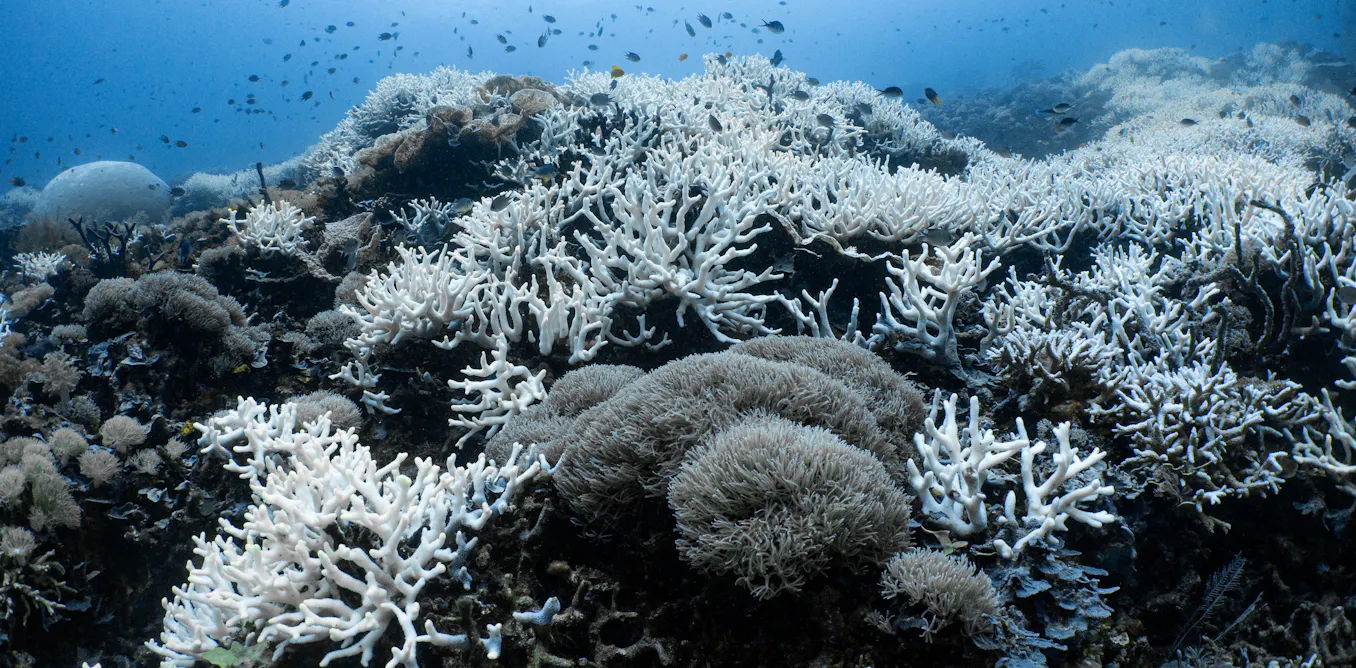
Indonesia's coral reefs have demonstrated unexpected resilience to rising ocean temperatures over the past 20 years, according to research spanning two decades. Many reefs across the Indonesian archipelago have maintained their structure and function despite prolonged thermal stress from climate change.
Scientists attribute this stability to several factors. Some Indonesian coral populations possess genetic traits that enhance heat tolerance. Local reef management practices, including marine protected areas and fishing restrictions, reduce additional stressors that make corals vulnerable to bleaching. Certain reef locations benefit from cooler water upwelling or ocean circulation patterns that moderate temperature increases.
However, researchers emphasize that this resilience reaches a breaking point. The tolerance observed in Indonesian reefs applies only within specific thermal windows. If ocean temperatures continue rising at current rates, these protective mechanisms will fail. Studies show that even heat-adapted corals face severe bleaching and mortality when water temperatures exceed their threshold by more than 1-2 degrees Celsius above their typical summer maximums.
Recent research from institutions studying Indonesian reef systems found that while some reefs avoided major bleaching events that devastated other regions, their stability masks an underlying fragility. Corals may survive higher temperatures, but they grow more slowly, reproduce less efficiently, and become more susceptible to disease. The energy cost of thermal tolerance leaves fewer resources for other essential functions.
The 2016 and 2020 global coral bleaching events affected Indonesian reefs, though some populations recovered more quickly than reefs elsewhere. This recovery capacity varies dramatically by location and reef type. Deeper reefs and those in specific oceanographic zones showed greater survival rates.
Scientists stress that heat tolerance cannot substitute for emissions reductions. The research documents Indonesia's reefs as a success story of local adaptation under current warming, not proof that corals can indefinitely withstand accelerating climate change. Limiting global temperature increases to 1.5 degrees Celsius remains critical to