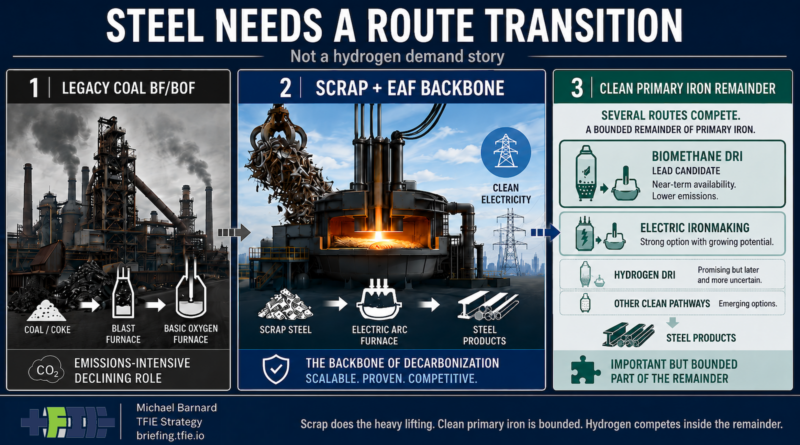
Steel decarbonization requires fundamental process transformation, not investment in speculative hydrogen infrastructure, according to analysis challenging the industry's current policy direction.
The steel sector produces roughly 7-9 percent of global carbon dioxide emissions. Current decarbonization strategies often center on hydrogen as a future reducing agent, shifting focus toward electrolyzer development, pipeline networks, and storage systems. This framing diverts attention from proven near-term alternatives.
Electric arc furnaces (EAFs) powered by renewable electricity offer immediate emissions reductions using scrap steel and direct reduced iron. This technology operates commercially today across multiple facilities worldwide. EAFs require route transitions in production rather than speculative hydrogen infrastructure rollouts.
The hydrogen-focused narrative creates policy problems. It delays deployment of available technologies while governments develop hydrogen strategies and negotiate offtake contracts. These discussions consume years without reducing current emissions. Steel mills operating now cannot wait for hydrogen infrastructure that remains years away from viability at scale.
Direct reduction routes using renewable electricity present clearer pathways. Companies like H2 Green Steel and others have begun operations using renewable-powered electrolysis paired with traditional reduction processes. These hybrid approaches bridge current production capacity with lower-carbon outcomes.
The distinction matters for climate timelines. The International Energy Agency projects industrial emissions must decline 50 percent by 2050 to meet climate targets. Steel contributes meaningfully to this total. Delay in adopting available technologies compounds the decarbonization challenge.
Route transition costs differ significantly from hydrogen infrastructure. Mill retrofitting to accommodate electric reduction requires capital investment and operational changes. Hydrogen infrastructure development adds layers of complexity, from production facilities to transport networks to storage systems, each with timeline and cost uncertainties.
Policy focus should prioritize what works now. Carbon pricing mechanisms that reward EAF adoption accelerate deployment faster than hydrogen subsidies. Procurement standards requiring lower-carbon steel create immediate market demand