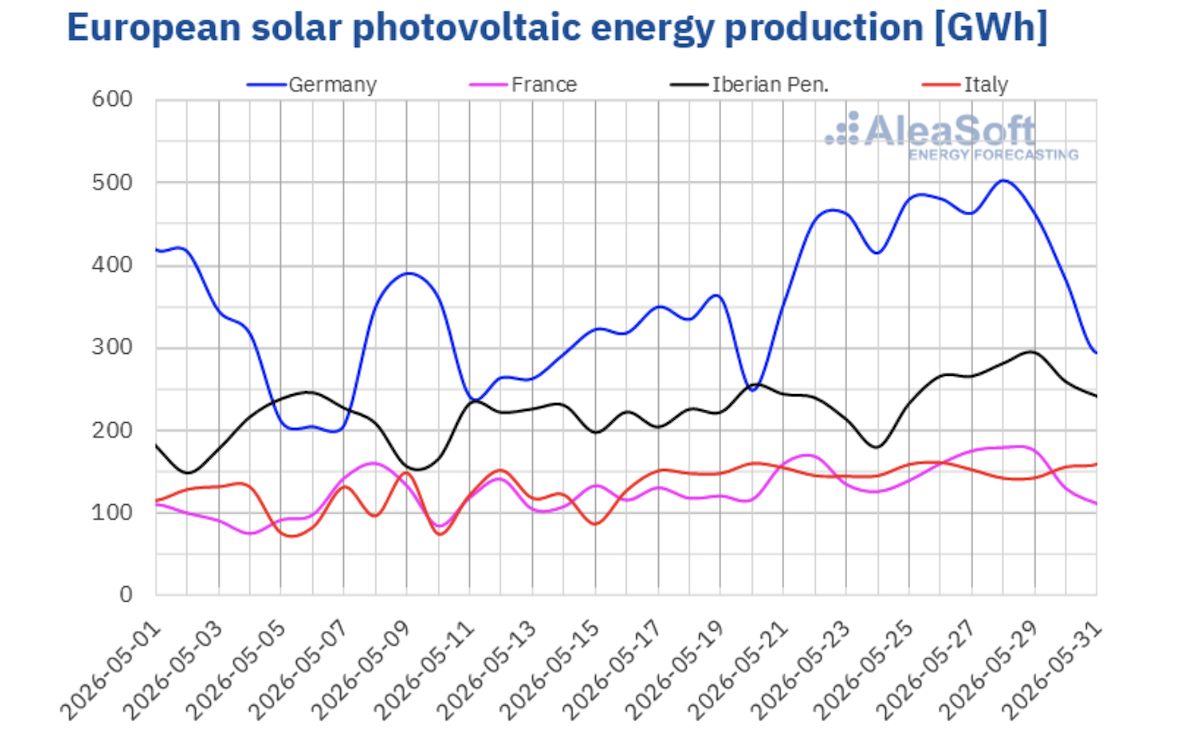
Five European nations shattered solar generation records in May as seasonal conditions and expanding renewable capacity drove output to historic highs. Germany, Spain, France, Italy, and Portugal all exceeded their previous peak solar generation levels during the month, capitalizing on longer daylight hours and clear weather patterns typical of late spring in Southern and Central Europe.
The surge reflects the accelerating deployment of solar infrastructure across the continent. Spain and Italy, both Mediterranean nations with abundant sunshine, have aggressively expanded photovoltaic capacity in recent years. Portugal has emerged as a renewable energy leader, with solar installations now covering significant portions of its electricity grid. Germany continues expanding its solar footprint despite less favorable solar irradiance conditions than southern neighbors. France has ramped up utility-scale solar projects to meet European Union renewable energy targets.
Record-breaking months demonstrate solar's growing role in decarbonizing Europe's power sector. Each nation faces pressure to meet binding EU climate targets requiring 42.5 percent renewable energy by 2030. Solar capacity additions have accelerated continent-wide, with installations climbing from roughly 16 gigawatts annually in 2021 to over 50 gigawatts projected for 2024.
Summer peaks in solar generation pose grid management challenges. Operators must balance high midday solar output with evening demand shifts, requiring flexible backup power or expanded battery storage capacity. Several nations have invested in grid modernization and storage infrastructure to handle this variability.
The May records arrive amid broader European renewable energy momentum. Wind power simultaneously achieved record output in multiple countries, with offshore installations contributing substantially. Combined renewable generation increasingly allows nations to reduce fossil fuel dependency and lower grid emissions.
These records signal solar's transition from emerging technology to grid-critical infrastructure. As capacity continues expanding and efficiency improvements lower costs, monthly records will likely become routine across Europe's sunniest regions. The challenge shifts from deployment to integration, storage, and grid