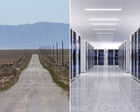
A Guardian analysis reveals that approximately two-thirds of planned US artificial intelligence datacenters will be constructed in drought-stricken regions, exacerbating water stress in areas already facing severe scarcity.
The facilities require substantial water volumes for cooling systems that prevent equipment overheating. Yet developers are targeting locations among the driest in the nation over the past year, according to the investigation. This expansion occurs as record-breaking drought conditions persist across much of the United States.
The mismatch between water demand and supply poses a direct conflict with regional sustainability constraints. AI datacenters consume millions of gallons daily. In water-scarce areas like the Southwest and Great Plains, this consumption competes directly with agricultural irrigation, municipal supplies, and ecosystem needs.
The Guardian's spatial analysis mapped proposed datacenter locations against US Drought Monitor data and precipitation records. The findings show clustering in regions already experiencing D3 and D4 drought classifications—severe to extreme conditions—where groundwater depletion accelerates and surface water availability shrinks annually.
Industry projections indicate datacenters will consume 4.5 percent of total US water use by 2030 if current expansion trajectories hold. States like Arizona, Nevada, and Texas, already managing water crises, face additional demand pressure. Texas alone hosts multiple announced AI facility projects in West Texas, where aquifer depletion threatens long-term viability.
The water consumption debate reflects broader tensions around AI's infrastructure footprint. While datacenters employ cooling technologies ranging from air-cooled systems to direct water immersion, recirculating closed-loop designs remain expensive and less common. Open-cycle wet cooling remains the industry standard despite water waste.
Regulators have begun scrutinizing these projects. Nevada's Public Utilities Commission and Arizona's Department of Water Resources initiated reviews of datacenter water permits. California's Environmental Quality Act now requires datacenters