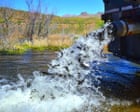
Arizona officials indefinitely closed San Carlos Lake to visitors after a complete fish kill devastated the reservoir. The Arizona Game and Fish Department attributed the die-off to drought conditions combined with water releases from the dam serving the lake.
The department's Friday statement confirmed that the "major fish kill" eliminated approximately 100 percent of the fish population. No timeline for reopening has been announced. The dual pressures of prolonged drought and managed water discharge created conditions toxic to aquatic life, though officials have not released detailed water quality data or specific environmental parameters that triggered the mortality event.
San Carlos Lake, located in central Arizona, serves as a recreation destination for fishing and boating across the broader Colorado River basin. The complete fish kill represents a cascading ecological failure tied directly to the region's water crisis. Arizona faces persistent drought driven by two decades of below-average precipitation and overallocation of Colorado River water rights. Reservoir levels across the state have fallen dramatically, with Lake Mead and Lake Powell both dropping to historic lows in recent years.
Water management decisions at dams like San Carlos involve balancing competing demands. Dam operators must maintain minimum flows for downstream users and generators while managing evaporation losses from exposed surface area. However, rapid water releases during drought periods can create thermal shocks and oxygen depletion in reservoirs, conditions that kill fish en masse.
The San Carlos Lake closure signals the widening ecological costs of the Southwest's water shortage. Fish populations provide food for wildlife, support recreational economies, and indicate broader ecosystem health. Complete population collapse suggests environmental conditions deteriorated beyond recovery thresholds before intervention occurred.
Officials have not announced specific restoration plans or fish restocking timelines. Reopening the lake will require both fish population recovery and resolution of the underlying hydrological stresses that caused the kill. Arizona's Water Department and Game and Fish must now address how future water management decisions account for aquatic ecosystem survival alongside competing