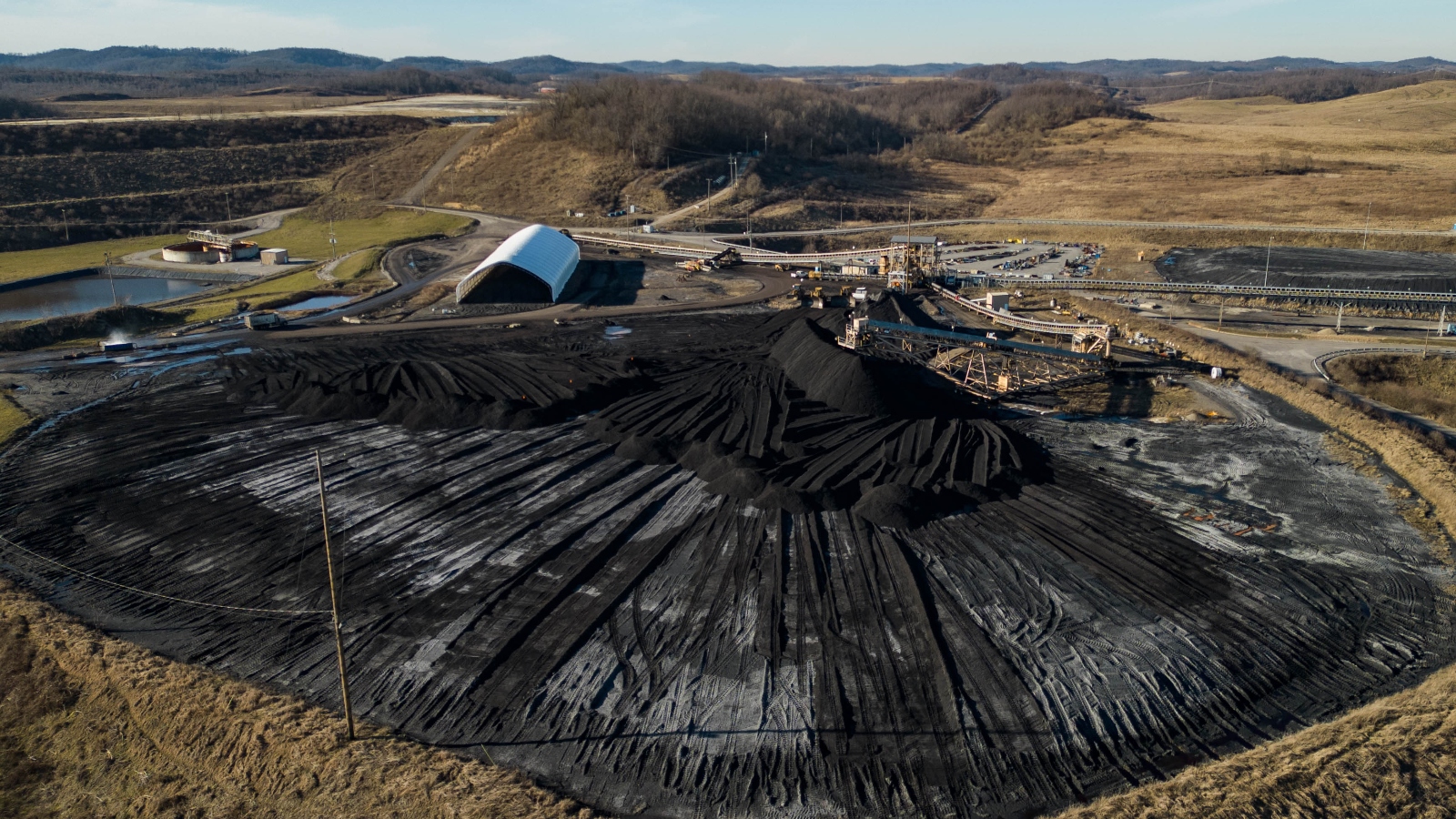
President Trump invoked the Defense Production Act to allocate $700 million toward construction of two new coal-fired power plants, one in Alaska and one in West Virginia. The announcement frames coal as a domestic energy priority under wartime authority designed to strengthen national manufacturing capacity.
The Defense Production Act, enacted during the Cold War, grants presidents broad powers to direct federal resources toward industries deemed essential for national security. Trump's application to coal plants represents an expansive interpretation of the statute, typically used for defense-critical manufacturing. The move bypasses standard congressional appropriations processes.
West Virginia, a major coal-producing state, stands to benefit directly from the funding. Alaska's plant would serve the state's remote communities with limited grid access. Both projects face substantial headwinds. Coal-fired generation has declined nationwide as natural gas plants operate at lower costs and renewable energy capacity expands. The levelized cost of new coal plants exceeds that of wind and solar installations in most U.S. markets, according to energy analyses from the National Renewable Energy Laboratory.
The announcement contradicts market realities. U.S. coal consumption dropped 28 percent between 2005 and 2023, per Energy Information Administration data. Coal's share of electricity generation fell from 50 percent in 2005 to roughly 17 percent in 2023. Existing coal plants increasingly operate unprofitably.
Trump's invocation of wartime powers for coal expansion signals a deliberate shift in energy policy. The administration frames coal revival as essential infrastructure, though the plants would emit substantial carbon dioxide. Neither facility has completed environmental review or secured private financing. The announcement provides no timeline for construction or operational capacity details.
The use of Defense Production Act authority for commercial coal projects sets a precedent for deploying crisis powers in nonemergency contexts. Congressional authority over budget allocation faces potential erosion if the approach withstands legal challenge. Environmental groups