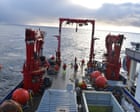
The Trump administration's plan to dismantle the US ocean observation system threatens to undermine global climate science and weather forecasting accuracy, according to warnings from American and European scientists.
The system under threat forms a critical component of the global ocean monitoring network. Its decommissioning would severely degrade weather prediction accuracy and El Niño forecasting capability, scientists say. The consequences extend beyond meteorology. Annual estimates of ocean heating rates would see massive error increases without the data these platforms collect.
Ocean observation systems track temperature, salinity, currents, and other variables across vast stretches of sea. This data feeds directly into climate models and weather prediction algorithms used worldwide. The National Oceanic and Atmospheric Administration (NOAA) and the National Science Foundation (NSF) operate major components of the US network, collecting observations that integrate into international datasets.
El Niño events, which oscillate between warming and cooling phases every few years, depend on accurate ocean monitoring for early prediction. These events trigger droughts, floods, and extreme weather globally. Forecasters rely on buoy networks, satellite data, and subsurface sensors to detect developing conditions months in advance. Removing US observational capacity directly reduces prediction lead time and confidence intervals.
The economic stakes are substantial. Shipping, fishing, agriculture, and disaster preparedness all depend on accurate El Niño and broader weather forecasts. Insurance and reinsurance industries price risk using these models. A degradation in forecast skill translates to financial losses across sectors.
European scientists underscore that the US system feeds data into multinational observational frameworks. Removing American monitoring capability creates gaps that European or Japanese systems cannot fully compensate for, given spatial coverage limitations. The loss represents a backward step after decades of coordinated international effort to build comprehensive ocean observation infrastructure.
Scientists emphasize that ocean data collection requires sustained, long-term commitment. Gaps in time series create scientific