Shaun Hancox has engineered hundreds of ponds across Britain after spending decades designing water features for golf courses. His shift from manicured fairways to rewilding projects marks a broader trend in freshwater habitat restoration driven by declining amphibian and invertebrate populations.
Hancox's work demonstrates that pond creation requires technical precision beyond simple excavation. Soil composition, bank angles, and water depth all determine which species colonize a new wetland. His expertise shapes the resulting ecosystem's capacity to support amphibians, dragonflies, and aquatic plants that vanished from degraded agricultural landscapes.
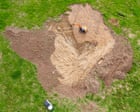
The mechanics are straightforward once the design work finishes. An excavator removes clay-heavy soil and sculpts banks into contours that create shallow zones for invertebrates and deeper refuges for fish and amphibians. Within weeks of rainfall, pioneer plants germinate from dormant seed banks in the soil. Insects and frogs arrive rapidly, establishing food webs that stabilize the new habitat.
This approach addresses a documented conservation crisis. Freshwater invertebrate populations in Britain have declined 84 percent since 1994, according to the Freshwater Habitats Trust. Pond loss accelerated through the 20th century as agricultural intensification and urban development eliminated these ecosystems. The remaining ponds became fragmented and isolated.
Rewilding organizations now recognize pond creation as a cost-effective restoration tool. A single constructed pond generates returns that compound. Early colonists attract predators. Vegetation establishes. Water quality stabilizes. Connected pond networks restore dispersal corridors for mobile species like newts and dragonflies.
Hancox's transition from golf course design to conservation work reflects changing land-use priorities. Golf courses employ sophisticated hydrology to manage playing surfaces. Those same skills apply to wildlife ponds, but with opposite goals. Instead of controlling and constraining