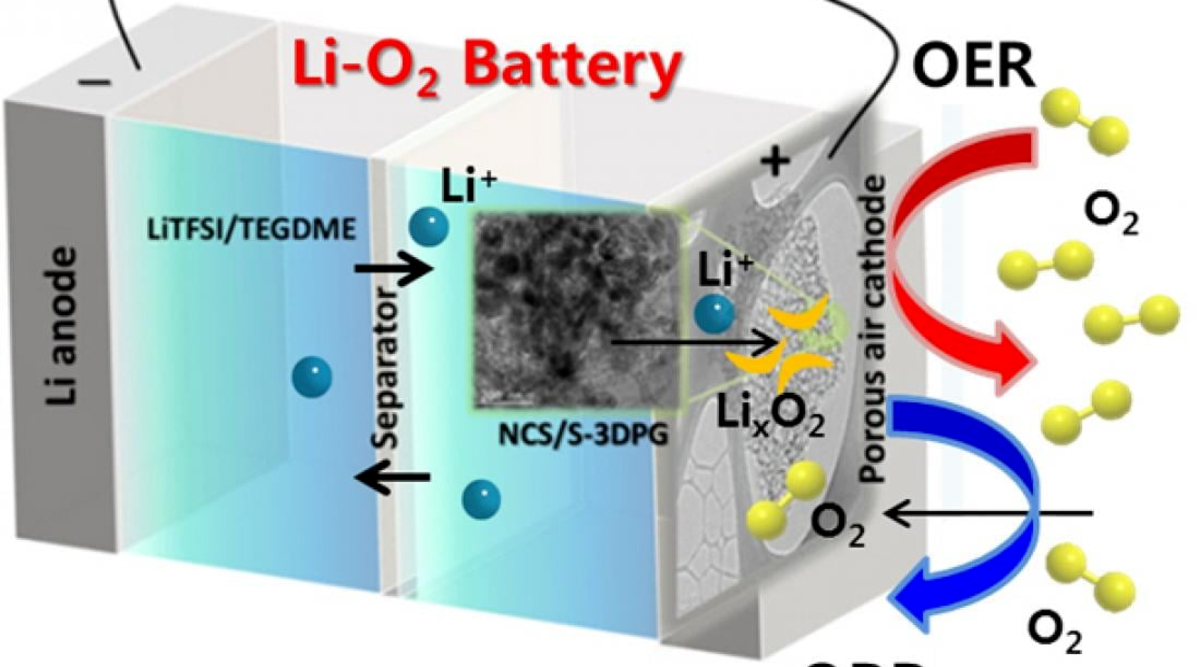
Chinese battery manufacturer CATL announced development of lithium-air batteries with energy density reaching 12,000 watt-hours per kilogram, a leap far beyond current commercial technology. Today's best lithium-ion batteries achieve roughly 250-300 Wh/kg, meaning the proposed cells would deliver 40 to 50 times greater energy storage in the same weight.
CATL, the world's largest EV battery maker by production volume, did not disclose a timeline for commercialization or specify technical hurdles remaining. The company has pursued advanced battery chemistries for years, including sodium-ion and solid-state variants, positioning itself to capture future markets as EV adoption accelerates globally.
Lithium-air technology operates differently from conventional lithium-ion cells. Instead of a graphite anode, these batteries use a porous carbon structure that allows lithium ions to react directly with oxygen from the air. This design theoretically enables dramatic weight and volume reductions for vehicle powertrains.
The challenge remains substantial. Lab demonstrations have shown promise, but lithium-air batteries suffer from cycle life degradation, structural instability during charge-discharge cycles, and safety concerns tied to reactive lithium metal. Researchers worldwide continue testing electrolyte formulations and cathode materials to extend battery lifespan while maintaining safety margins.
Success would reshape transportation electrification. Aircraft manufacturers particularly target such energy densities for electric flight viability. Electric vehicle ranges would extend dramatically, reducing charging infrastructure demands. Battery costs per kilowatt-hour could fall further as manufacturing scales.
CATL's announcement reflects intensifying competition among Chinese battery makers to dominate next-generation storage. BYD, the world's second-largest EV battery manufacturer, pursues solid-state alternatives. This race matters because battery capabilities directly determine EV performance, price, and market competitiveness against internal